

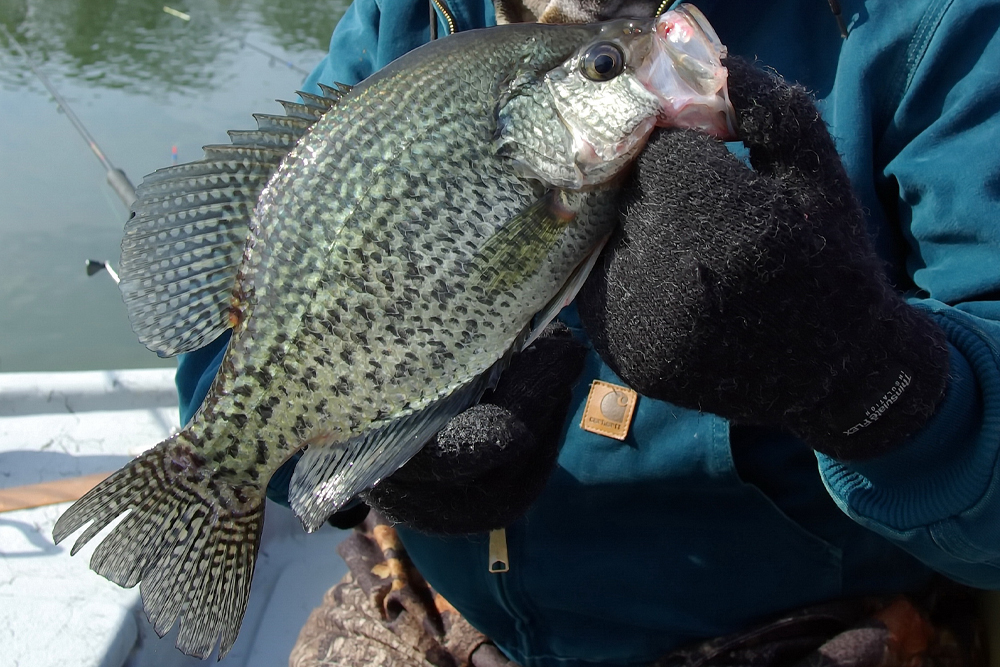
January or February are typically the coldest months in the South, but anglers
willing to dress warmly and bear the low temperatures can find plenty of slab
crappie biting in the region’s top lakes.
Chasing Winter Slabs: A Southeastern Crappie Road Trip
Story and photos by Keith Sutton
When most of the country is locked in ice, the South is just hitting its stride for winter crappie action. From the ledges of Kentucky Lake to the brushpiles of Lake Ouachita, January offers mild weather, hungry fish and enough small-town charm to keep every traveler smiling, even the ones who never pick up a rod. Pack your jig boxes, a camera and an appetite, because this crappie road trip runs straight through the heart of the South’s best winter waters, with stops at some great restaurants and scenic attractions.
Stop 1: Kentucky Lake, Kentucky/Tennessee Line
Start the journey at Kentucky Lake, a sprawling 160,000-acre impoundment stretching across the Kentucky-Tennessee border and long considered sacred ground for slab seekers. In January, water temps hover in the high 40s to low 50s, concentrating fish along deeper creek channels and ledges. Local veterans favor 1/8-ounce hair jigs or minnows worked slowly over submerged brush in 15 to 25 feet of water. When the sun peeks out, crappie often slide up a few feet to chase threadfin shad, so electronics can make all the difference. This season, fewer boats on the water mean you’ll often have whole bays to yourself. Launch at Kenlake Marina or Paris Landing State Park and you’ll be on fish in minutes.
Off the water, wander through Murray, Kentucky where Rudy’s on the Square serves classic Southern comfort food (including breakfast all day) and the Wrather West Kentucky Museum offers a glimpse of regional history. Non-anglers can spend a peaceful afternoon at Land Between the Lakes National Recreation Area watching elk, bison and bald eagles, a fine reminder that winter in the South is anything but bleak.
Stop 2: Pickwick Lake, Tennessee/Alabama/Mississippi
A half-day’s drive south brings you to Pickwick Lake, a 43,000-acre TVA gem touching three states. In January, schools of black and white crappie gather along mid-lake drops and around docks near Yellow Creek and Bear Creek. The tailrace below Pickwick Dam can be red-hot when current flows, producing thick slabs for anglers who are spider-rigging or single-poling in the eddies.
Pickwick is a multitasking stop for traveling families. History buffs can explore Shiloh National Military Park, one of the nation’s best-preserved Civil War battlefields. Music lovers can swing by Tuscumbia’s Alabama Music Hall of Fame, just down the road. When the day winds down, grab a catfish platter at Hagy’s Catfish Hotel, a Shiloh, Tennessee institution since 1938, where conversations at the next table often turn to who caught what and where.
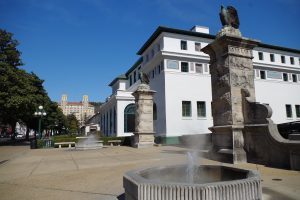
Stop 3: Weiss Lake, Alabama
Known far and wide as The Crappie Capital of the World, Weiss Lake near Centre, Alabama, is a must-fish in any season. But January is special. As the lake cools, crappie bunch along the main river channel, feeding ahead of the prespawn period. Read much more about Weiss Lake in this month’s article by Madalyn Roberts Read Article
In addition to the fishing, Centre offers plenty for the rest of the crew. Cherokee Rock Village near Leesburg, Alabama provides panoramic views of Weiss Valley and trails winding among giant sandstone boulders. The attraction’s antique stores and cozy cafés make for a leisurely morning while the anglers are chasing limits. Wrap up the day at the Fishin’ Hole Restaurant where the fried catfish and hushpuppies taste like Alabama tradition on a plate.
Stop 4: Grenada Lake, Mississippi
From Weiss, point the truck west toward Grenada Lake, the crown jewel of Mississippi crappie waters. This U.S. Army Corps of Engineers reservoir has produced some of the largest crappie ever recorded, and January can deliver jaw-dropping results when weather patterns stabilize. Spider-rigging slowly and deep along the main lake flats is the go-to method. Many anglers focus near the Highway 8 bridge and the mouths of creeks like Turkey and Redgrass.
Grenada winters are fickle—sunny one day, frosty the next—but when conditions line up, your reward could be a 2-pound-plus slab that bends your rod like a willow branch.
For a break, explore Downtown Grenada’s Square lined with boutique shops and bakeries. Grab lunch at 333 Restaurant, a local favorite serving hearty Delta-style dishes. Non-anglers can hike the rolling trails of Hugh White State Park, where pine forests overlook the same lake producing those giant crappie.
Stop 5: Lake Ouachita, Arkansas
Finish the journey in the heart of the Ouachita Mountains of central Arkansas. Lake Ouachita’s clear, deep water may look daunting at first glance, but it holds strong winter populations of both black and white crappie. Locals target brushpiles in 20 to 30 feet of water using small plastics or minnows presented slowly on a tight line. Electronics are essential here. Once you mark fish, stay patient and they’ll reward you.
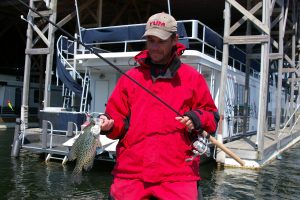
January mornings on Ouachita are quiet, the water glassy and the air scented with pine. It’s a perfect setting for scenic photos and solitude.
When the rods are stowed, nearby Hot Springs National Park offers plenty to unwind: tour Bathhouse Row, soak in the natural thermal springs or browse local galleries along Central Avenue. Dinner at Rolando’s Restaurante adds a touch of Latin spice to an Arkansas evening, and breakfast the next morning at The Pancake Shop will have you fueled for the road home.
The Drive and the Dream
Taken together, these five stops form a natural south-swinging circuit—roughly 1,200 miles from start to finish—that connects many of the most productive winter crappie fisheries in America. Each destination rewards patience, precision and a willingness to slow down, both in fishing and in travel.
For the diehard angler, January offers solitude, trophy potential and crisp air that clears the mind. For traveling families, the route unfolds like a living postcard of the South—river valleys, mountain ridges, barbecue smoke and friendly folks eager to talk about fishing.
While northern lakes sit frozen, these waters hum with life. Crappie stage deep, feed heavily and give up some of the biggest catches of the year to those willing to chase them. So, fill the thermos, fire up the truck and set your GPS from Kentucky to Arkansas. Somewhere down the line, in a quiet cove or along a sun-warmed dock, you’ll find what every winter fisherman seeks: that heavy, thumping bite that says the South’s crappie season is alive and well.
Keith Sutton of Alexander, Arkansas has been an avid crappie fisherman for more than 50 years. His book, The Crappie Fishing Handbook, has recently been reprinted and is available through his website or by sending a check or money order for $20 (includes shipping) to C&C Outdoor Productions, 15601 Mountain Dr., Alexander AR 72002.
