


Prespawn travel routes often produce some of the heaviest slabs
of the season as big females move toward the bedding grounds.
Finding and Fishing Prespawn Travel Routes
Story and photos by Keith Sutton
Every spring, as the lengthening days begin nudging water temperatures upward, crappie shift into a pattern that savvy anglers anticipate all winter long: the prespawn migration. It’s a brief but highly predictable window when crappie move out of their wintering holes and begin traveling toward shallower spawning grounds. They don’t make the trip all at once. Instead, they follow specific underwater routes—travel corridors—that guide them from deep, secure water to the warming, fertile shallows.
Understanding these routes is one of the most reliable ways to stay on fish as winter fades and spring approaches. Anglers who learn to identify and fish these underwater pathways often catch some of the year’s biggest crappie. Here’s how to find those routes, interpret what you’re seeing and fish them effectively.
What Makes a Prespawn Travel Route?
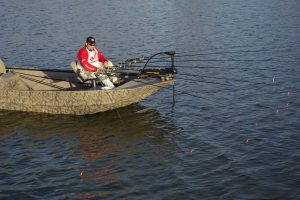
Crappie are structure-oriented fish. During prespawn, they follow predictable lines of movement much like deer travel deer trails. The “routes” aren’t always literal paths, but they usually share several characteristics:
- Connection: A travel route connects where crappie are (their deeper wintering locations) with where they want to go (spawning flats, coves or backwater pockets). A good corridor always links two key seasonal areas.
- Gradual Depth Change: Crappie seldom move from 25 feet to five feet in a straight shot. They use intermediate structure—ledges, staging drops, secondary points, creek-channel shelves—where they can pause, feed and wait for conditions to improve.
- Cover Scattered Along the Way: Brush, stumps, stake beds, laydowns, submerged timber and even isolated rocks provide security and ambush points. Crappie rarely travel across big barren flats without something to orient to.
- A Defined Channel or Contour: The most consistent prespawn routes trace along channels—the main river channel, primary and secondary creek channels or man-made ditches. Even a subtle depression on a flat can funnel fish movement.
When you find a route that has these elements, you’ve found the aquatic equivalent of a two-lane highway packed with prespawn traffic.
Step 1: Start With the Spawning Area
Most anglers start deep and work shallow. A better strategy is to reverse that process.
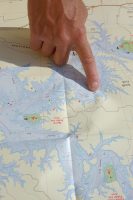
Crappie return to the same types of spawning areas every spring: protected coves, shallow creek arms, protected pockets off the main lake and backwater areas where sunlight hits early. Study a map and mark those predictable places first.
From each likely spawning site, work your way backward into deeper water. Ask yourself: Where would a fish travel if it were coming up from deep water to reach this spot?
Identify the nearest channel swing, the nearest secondary point or any underwater cut leading toward that shallow spawning real estate. Nine times out of ten, that’s the corridor the fish are using.
Step 2: Find Wintering Water
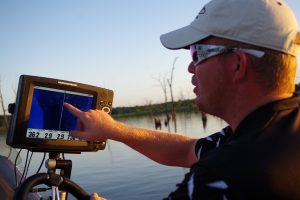
At the other end of the route is the deeper wintering zone where crappie hold during the coldest months. In most reservoirs, wintering areas include:
- the deepest end of a creek arm
- channel bends with 20-40 feet of water
- sharp breaks near the dam
- isolated timber in deep water
- steep-dropping bluff banks
These zones give crappie stability—consistent temperatures and oxygen—and the fish rarely move far from them until prespawn begins.
When the water temperature begins to creep into the upper 40s and low 50s, crappie start sliding out of these holes and heading toward the first piece of structure leading shallower.
Step 3: Connect the Dots on Your Electronics
Today’s electronics make identifying travel routes far easier than it used to be. You’re not just looking for fish; you’re mapping the route itself.
Side imaging reveals:
- channel edges
- brush and stake beds
- transitions between hard and soft bottom
- isolated stumps and standing timber
- subtle depressions in otherwise flat water
Down imaging helps fine-tune what kind of cover is actually present on the spot.
Forward-facing sonar shows the true behavior of fish moving along these routes—their direction, how tight to cover they are and whether they’re aggressively feeding.
You should, however, resist the temptation to only look for fish. Sometimes the fish are simply out of view but will use the same route daily. If the structure and contour are right, fish will come through.
How Prespawn Crappie Use the Route
Prespawn movement isn’t one long migration. It’s a series of short steps.
Stage 1: Deep-to-Mid Transition. Fish slide up the main or secondary creek channel and stage on the first significant break or point. They hold there when weather fluctuates or when cold fronts push them back temporarily.
Stage 2: Mid-Depth Staging Zones. Crappie gather around brushpiles, fallen timber, isolated stumps or contour changes from 10-18 feet. These are feeding zones where fish may hold for several days.
Stage 3: Pre-Entry Shallow Staging. Before fully committing to the shallows, crappie stack just outside spawning flats, often in six to 12 feet of water. These spots can load up with some of the heaviest females of the season.
Understanding how these stages stack along a route lets you stay one step ahead of fish that can otherwise seem to vanish from day to day.
How to Fish Prespawn Travel Corridors
When you have identified the corridor, it’s time to present baits effectively.
- Target the “Stop Signs” First. Crappie pause at predictable spots. Prioritize:
- brushpiles on the channel edge
- isolated timber or stake beds
- small shelves on a steep drop
- the end of a secondary point
- channel bends where depth softens
Even in open water, a single stump can hold dozens of fish during prespawn.
2. Slow-Troll or Spider Rig the Route. Slow-trolling with multiple rods covers water and keeps baits moving through the migration path. Key tips:
- Use light-wire hooks and small to medium minnows.
- Vary depth constantly. Fish may suspend four feet off bottom even in 20 feet of water.
- Pay close attention to your GPS trail; follow the contour line precisely.
3. Use Forward-Facing Sonar for Precision Jigging. Targeting individual fish or tight schools along the corridor has become a staple for many modern anglers. Present small jigs or plastics and watch how fish react. Move vertically when they hold tight or pop the jig when they’re more active.
4. Fish the Leading Edge During Warming Trends. On a warm, steady-weather stretch, crappie push to the shallower end of the corridor. This is when casting to stumps, pitching jigs to brush or long-poling shallow wood can be dynamite.
5. During Cold Fronts, Back Up and Slow Down. When the weather turns nasty, crappie slide deeper along the same corridor. Simply backtrack to the next piece of structure down the route and slow your presentation to a crawl.
The Magic of Timing
Water temperature is important, but it isn’t everything. Prespawn movement is heavily influenced by sunlight, water clarity, lake level changes and stable weather patterns.
A sudden 10-degree warm spell can move fish fast. Conversely, a cold rain or muddy inflow can stall migration for a week. If you keep following the corridor, however, you’ll always be close to the fish.
Final Thoughts
Finding prespawn crappie doesn’t have to feel like chasing ghosts. These fish aren’t wandering randomly; they’re following natural underwater routes that connect deep winter habitat to shallow spawning areas. Learn to identify those corridors, understand how fish use them as staging zones and fish each piece of structure in sequence.
Do that, and you’ll stay on prespawn slabs long before they ever reach the shoreline and long before most anglers realize the movement has begun.
(Keith Sutton is an outdoor communicator and lifelong angler who has written about fishing, wildlife and conservation for more than five decades. He is editor of and a regular contributor to CrappieNOW and CatfishNOW magazines.)
