

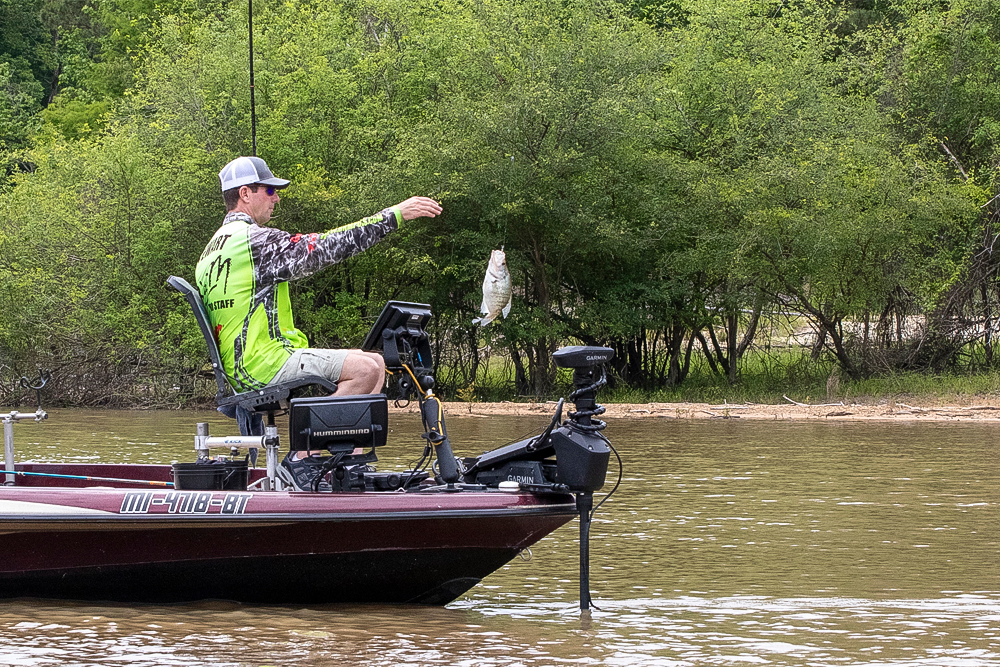
Grenada Lake is “Home of the Three-Pound Crappie”. Terry Stewart says several
techniques work good on the lake, but forward-facing sonar is the best way to
find and catch the big slabs.
CrappieNOW’s Top 10 Crappie Lakes for 2026
Story and photos by Tim Huffman
A best lake list is determined by the fishermen who are asked. For example, some fishermen enjoy open waters, while others prefer stumps or vegetation. Some fishermen like to shoot docks, some slip-cork, while others use forward-facing sonar. Top lakes vary with each fisherman.
I thank Dan Dannenmueller, Doug Allen, and Kris Mann, whose rankings, along with recent lake histories, were averaged to create this year’s top 10 list. Any of these waters would provide an excellent chance for a trip of a lifetime in 2026.
1 Grenada Lake, Mississippi, is the top pick for a chance to catch a 3-pound crappie. Nutrient-rich waters along with quality fish management keep Mississippi lakes in the top 10. Grenada Lake has 35,000 acres where peak prespawn and spawning typically takes place mid-February through March. However, a trip any time of year provides potential big-fish opportunities. Grenada has plenty of hotels and restaurants. The negatives of Grenada Lake include crowded ramps in the spring, tricky navigation and dangerous water with moderate winds.
2 Lake Fork, Texas, is another lake where it’s possible to hang a monster crappie. It also produces good numbers of fish. The 27,000 acres offer a variety with timber, docks, grass, bridge pilings and other structures. Several techniques work there, but it’s a forward-facing sonar paradise. It has both black and white crappie ready to attack a bait. Try December to February for deep winter crappie but move shallow in spring (March-May).
3 Barnett Reservoir, Mississippi, known as “The Rez”, is popular due to the number of crappie along with a generous number of big slabs. It may not be at its peak at this time, but it’s a good spot to add to your list of “must try” lakes. The lake’s structures allow different techniques to be successfully used. It’s in the city of Jackson so it gets fishing pressure, but it doesn’t have the out-of-town pressure of its northern neighbor lakes of Grenada and Sardis. The Jackson area has the advantage of family activities to enjoy when not fishing.
4 Sardis Lake, Mississippi, is known as a top fishing lake. It produces lots of crappie, with many in the 10- to 14-inch range. Power trolling, pulling and forward-facing sonar are popular methods. Like most Mississippi lakes, it doesn’t take a lot of wind to be dangerous here, so keep an eye on weather reports. It also gets a lot of fishing pressure. This is a fun lake to fish. The state park offers a good campground. Most lodging requires a little drive to Batesville or Oxford.
5 Clear Lake, California, had a record 4.33-pound crappie caught in 2021. This lake has environmental issues, but it’s a well-known monster bass lake and has a good history for crappie, too. It has large black crappie. Winter fishing takes place in depths of 20 feet plus. Try April for shallow spring spawners. Typical jigs work great, with float/fly rigs being popular there. Good electronics are necessary for finding baitfish and crappie. Expect good fishing here.
6 Enid, Mississippi, is a lake that provides lots of action. The 22,000 acres are famous for a 5-pound, 3-ounce, 21-inch record crappie caught decades ago. Today, it’s popular for good numbers of fish just over and under the 12-inch-plus length limit, but it provides a few big slabs, too. Action is typically excellent. Trolling, pushing and power trolling are popular methods, but a variety of techniques work.
7 St. Johns River, Florida, is the place to go for big, beautiful, gold-tinted black crappie. The bucket-list lake has big crappie, but it’s also number one for beautiful scenery. It’s a great winter crappie destination, especially from December through February. Jig, troll, shoot docks, cast or slow troll. The lake is near many fun family destination spots.
8 Weiss Lake, Alabama is in the top 10 for the second year in a row. It has 30,200 acres with 447 miles of shoreline, along with many structures and covers for crappie to hide. Fishing is good along the channels, especially when the water is cool. The shallow flats are good during the spawn and warm months. Docks, brush and stumps provide plenty of options to enjoy catching crappie year-round.
9 Lake D’Arbonne, Louisiana, is a fun and productive lake. The main river channel is good in the winter, while shallow to mid-depth water is best in spring through the fall. Any technique can be used because of the variety of places to fish and the amounts of cover, but in recent years, forward-facing sonar dominates. Navigation is tricky and dangerous, so idling is recommended if you’re out of the channel. The lake can have quick water fluctuations, so check conditions before going.
10 Santee Cooper, South Carolina, can be good any time of year, but peak season is during the spring spawn in late March and April. Santee is made up of two lakes, Marion and Moultrie. Each has different characteristics, with Lake Marion being a little shallower with lots of standing cypress trees and stumps. Fishing grass, stumps and trees can put you on fish. Whether chasing fish in Marion or the more open water of Moultrie, finding structures and wood covers are key. Today, forward-facing sonar is the primary tool to find crappie and put a bait on them.
Top 50 Lakes
For a look at the Top 50 Crappie Lakes, check out Tim Huffman’s website at www.MonsterCrappie.com
(CrappieNOW senior writer and National Fresh Water Fishing Hall of Fame member Tim Huffman has written several books, including his newest, Papermouth, Modern Fishing Techniques, available in Kindle or paperback on Amazon, or from his website, www.monstercrappie.com.)
