

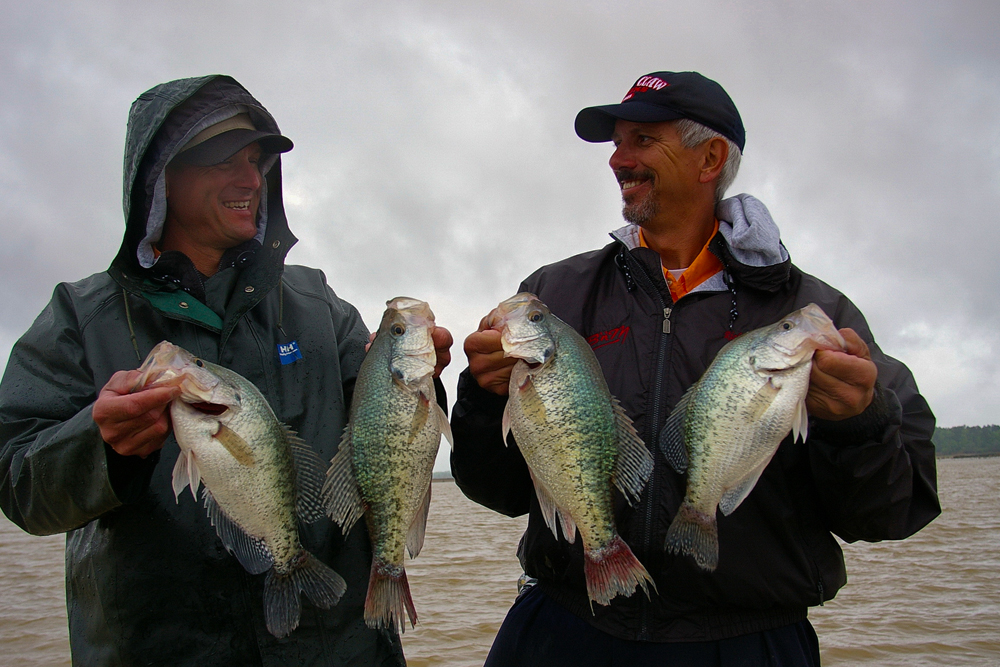
Falling barometric pressure and cloudy skies ahead of a cold front
often trigger aggressive feeding activity from crappie. Photo by Keith Sutton
Mastering Fall Fronts: Crappie Strategies When the Weather Swings
By Keith Sutton
Early fall is a season of transition on crappie waters. Summer’s heat begins loosening its grip, cool nights arrive more often, and the first cold fronts start sliding across the country. One day may feel like late summer, with stable weather and warm temperatures. The next may bring brisk north winds, falling temperatures and rising barometric pressure.
For anglers, these quick weather swings can make crappie fishing seem unpredictable. But crappie don’t vanish when a front passes. They simply change behavior. Anglers who understand how falling temperatures and shifting barometric pressure affect fish movement can stay on the bite when others struggle.
Learning to adjust your tactics before, during and after a front can turn early fall into one of the most productive crappie seasons of the year.
Before the Front: Feeding Time
The hours leading up to an approaching cold front are often prime time for crappie anglers. Falling barometric pressure and increasing cloud cover tend to stimulate feeding activity.
Crappie seem to sense the weather change and often begin feeding aggressively before the front arrives. Schools may move shallower and roam more actively as they chase baitfish.
During this period, anglers should focus on covering water and locating active fish. Productive areas often include brushpiles on flats, standing timber along creek channels, secondary points near deeper water and shallow coves holding baitfish.
Crappie may suspend several feet off the bottom and move horizontally while feeding, so presentation speed matters. Techniques that allow anglers to search efficiently often produce the best results.
Casting small jigs or jig-and-minnow combinations around visible cover is effective. Spider rigging or slow trolling with multiple rods can also help locate scattered schools. When fish are aggressive, a slightly faster presentation often triggers more strikes.
Bright or contrasting jig colors frequently work well under cloudy prefrontal conditions. Don’t hesitate to experiment until fish reveal a preference.
When the barometer is falling and winds begin shifting ahead of the front, it’s a good time to be on the water.
During the Front: Slow Down
When the front actually passes, conditions can change quickly. Winds shift to the north, temperatures drop and skies often clear. At the same time, barometric pressure rises sharply. This is the period when many anglers believe crappie stop biting.
In reality, crappie rarely stop feeding completely, but their activity level usually declines. Fish that were roaming and chasing bait only hours earlier often move tighter to cover or slide into slightly deeper water.
The key during this phase is slowing down. Crappie holding close to brush or timber often prefer a bait presented slowly and precisely. Vertical fishing becomes especially effective because it keeps the bait in the strike zone longer.
Small adjustments can also make a difference. Try using lighter jigs for a slower fall, downsizing bait profiles, fishing deeper edges of brushpiles and holding the bait nearly motionless.
Crappie often strike subtly during high-pressure conditions, so watch rod tips carefully and maintain a sensitive presentation.
Another overlooked tactic during a front is targeting deeper structure. Fish that were feeding on shallow flats may slide toward nearby drop-offs, creek channels or submerged timber along deeper edges. Electronics can help identify these transitions and locate suspended fish that aren’t hugging cover.
After the Front: Patience Pays
The day following a strong front can be challenging, but the bite rarely stays tough for long.
As high pressure settles in, skies often turn bright and winds calm. Under these conditions, crappie frequently become more predictable again, though they may remain slightly deeper than before the front.
Stable weather allows fish to regroup and resume feeding patterns. During this post-front phase, anglers should focus on structure close to deeper water. Productive spots often include brushpiles along channel edges, timber near creek bends, deeper stake beds and submerged roadbeds.
Fishing vertically with minnows or small jigs is usually the most consistent approach. Keeping the bait slightly above the fish will produce better results than fishing below them.
Bright, sunny conditions also make shade important. Crappie may hold on the darker side of brushpiles, under docks or along timber that provides overhead cover.
Precise presentations become critical. Dropping a bait directly beside a stump or deep inside a brushpile can trigger strikes anglers miss when casting from a distance.
Follow the Bait
Regardless of weather phase, baitfish location plays a major role in fall crappie fishing. As water temperatures gradually cool, shad and other baitfish often migrate toward creek arms and shallow coves. Crappie follow these food sources, though their depth may change depending on weather conditions.
Before a front, baitfish may push shallow and scatter across flats. After a front, they often retreat toward deeper channels or suspend over structure.
Using electronics to locate bait schools can dramatically shorten the search for crappie. When you find the groceries, the slabs usually aren’t far away.
Wind Can Help
Although strong winds accompanying fall fronts can make boat control difficult, they can also improve fishing.
Wind pushes plankton and baitfish toward windblown banks and points, and crappie frequently gather in these areas to feed.
Casting jigs to windblown brushpiles or shoreline cover can produce excellent results. The wave action breaks up light penetration and often makes fish less wary.
Just be sure to maintain safe boat positioning and avoid areas where rough water becomes hazardous.
Stay Flexible
Perhaps the most important lesson for anglers fishing early fall fronts is flexibility. Crappie behavior can shift quickly as weather changes. A shallow pattern that works one day may fail completely after a cold front. Fish that were aggressive yesterday may require slower presentations today.
Successful anglers adjust depth, location and presentation until they reconnect with the fish.
Instead of assuming the bite has disappeared, treat every weather shift as a clue about where crappie have moved.
One of the Best Seasons
While weather swings can make early fall fishing seem unpredictable, they also create opportunity. Cooling water temperatures energize crappie after the stress of summer heat, and fish begin feeding more actively in preparation for winter.
Anglers who learn to read approaching fronts—and adjust their tactics accordingly—often discover that early fall produces some of the year’s best crappie fishing.
When the weather starts bouncing between warm afternoons and cool mornings, don’t stay home waiting for stable conditions. Grab your poles, watch the barometer and follow the bait. With the right adjustments, those swinging fall fronts can lead straight to a cooler full of slabs.
(CrappieNOW editor Keith Sutton has fished for crappie in more than half the U.S. states. His favorite waters are cypress lakes along the major rivers of the South.)
