

Paddlin’ with Madalyn: Finding the Right Setup
Story and photos by Madalyn Roberts
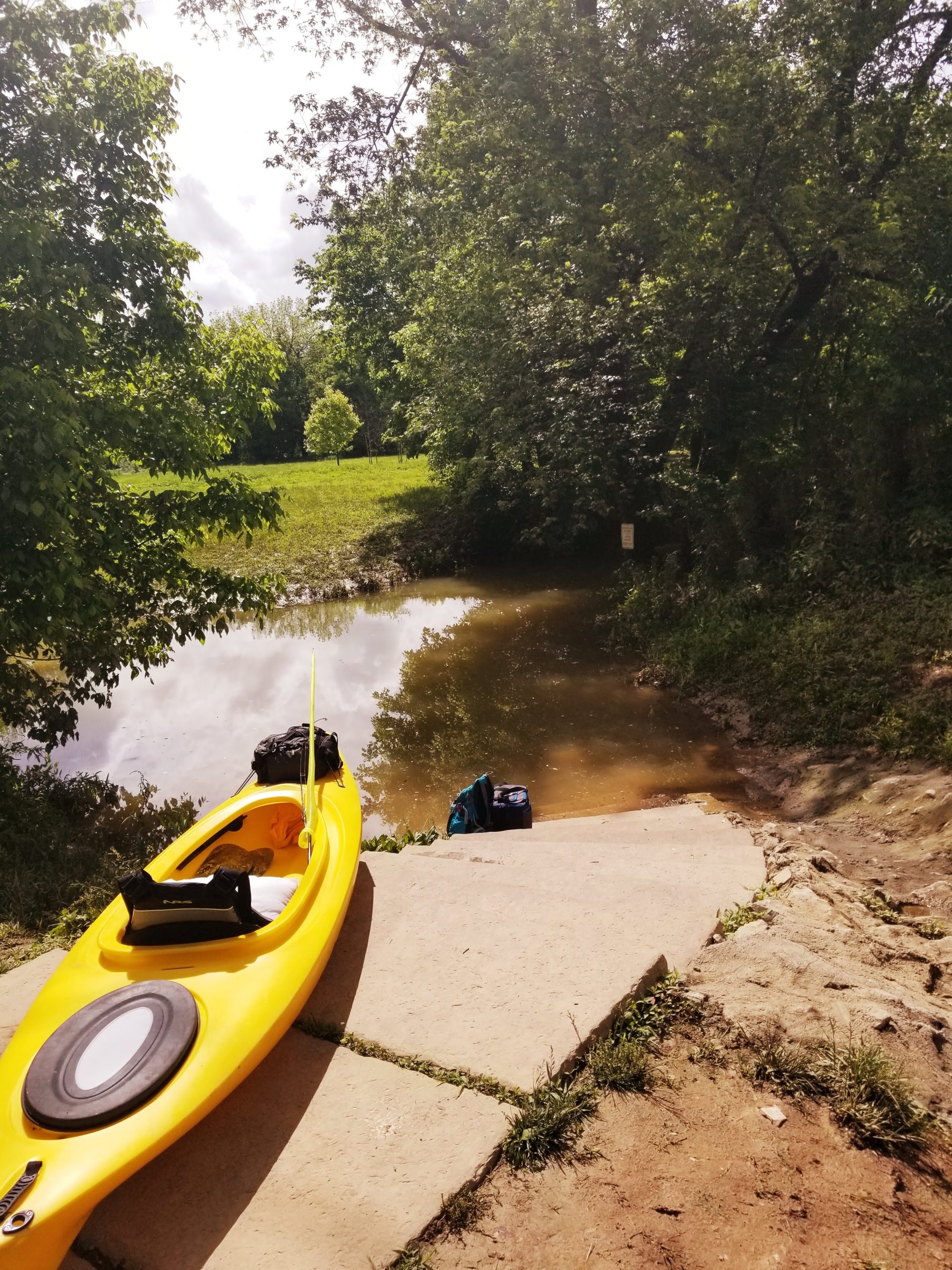
One of my favorite aspects about kayak fishing is that it is for everyone of all skill levels. One can invest as little or as much money as budget allows to take part in the activity. Below is a photo of my first kayak and my fishing setup for it, the extent of which included a paddle, a PFD, a rod and reel, and a tackle bag.
In this bright yellow sit-in kayak, I experienced miles of adventure on various Kentucky waterways, and, looking back, what I appreciate most is the immersive experience it provided. The simplicity of this setup allowed me to enjoy my surroundings and not worry about the little things.
Admittedly, when fishing in any body of water with current, the constantly changing surroundings and situations that may arise from them have a way of forcing one to focus on the present. The downfall of fishing in water without current is the self-propulsion aspect. One can only cover as much water as stamina allows, and it remains a challenge to paddle and cast and retrieve simultaneously.
Once I zeroed in on crappie fishing, I decided to invest in a kayak that had trolling motor capability because, at the time, I equated crappie fishing with trolling multiple lines. So, when I purchased my NuCanoe, my first additions were a motor and rod holders for trolling.
Not being a very tech-savvy individual, and with zero knowledge of fishing electronics, what I quickly learned after adding a fishfinder is that not all units have map downloading capability. Furthermore, I didn’t really understand what I was viewing on the sonar display. I used my electronics for water depth and temperature and then tracked location with the help of Google maps and my phone GPS.
Running a basic setup like this means having the ability to drop in almost anywhere without the fuss and hassle of managing all the extra gear. Sometimes less truly is more.
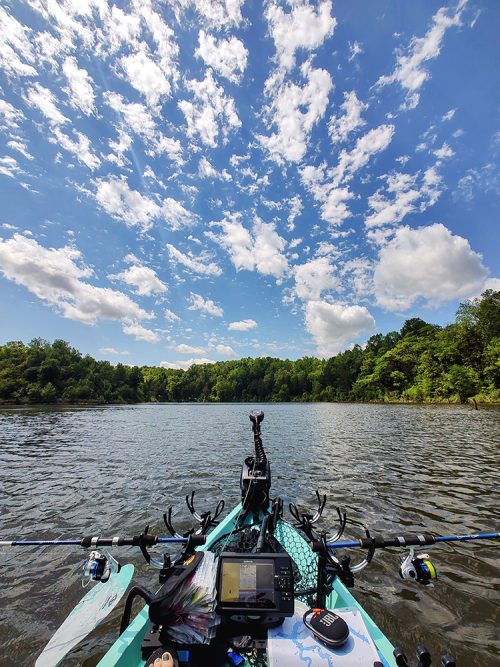
When running this setup, the biggest problem Madalyn Roberts ran into was figuring out what bait to pull from the binder. Minor issues like not having mapping capability were solved with a phone GPS and an old-school laminated lake map for reference. This is, sadly, something the younger generation would consider “old-school.”
When I made my electronic upgrade from the Garmin STRIKER Vivid 7cv to the Garmin ECHOMAP Ultra 126sv and the LiveScope Plus LVS34, the main reason was because of the distinct advantages provided by newer technology, including the increased amount of information an angler can gain from them. There are, however, a few drawbacks to having the latest and the greatest. The most obvious are troubleshooting issues as they occur in real time. Many times, I’ve found myself so caught up with a technical difficulty, I forget to appreciate being out on the water in the first place.
Something else to consider is the more equipment, the more chances there are for something to malfunction.
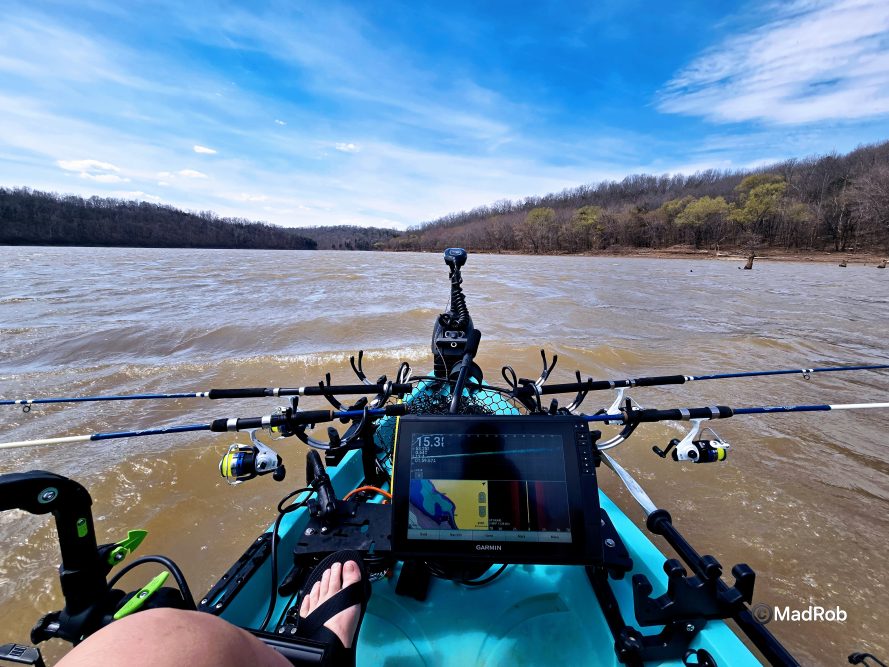
One of the author’s favorite features of the ECHOMAP Ultra 126sv is the depth shading feature. When trolling, she always has the screen set to a combination screen that includes her depth shaded navigation map.
I’ll be honest: when you start to accumulate a lot of equipment on a kayak, things can start to feel claustrophobic quickly. No matter what type of kayak you may fish out of, my best advice is to be intentional in gear selection, and regardless of what issues arise out on the water, always be thankful for the opportunity to spend time outdoors.
(Madalyn Roberts is from Kansas City, Missouri although she considers herself a southern transplant having lived in Kentucky for 17 years. She serves her Louisville community by working for a non-profit organization facilitating free home repairs for elderly and disabled homeowners. In her spare time, she enjoys being in the outdoors in all capacities most especially fishing, hiking, & camping.)
