

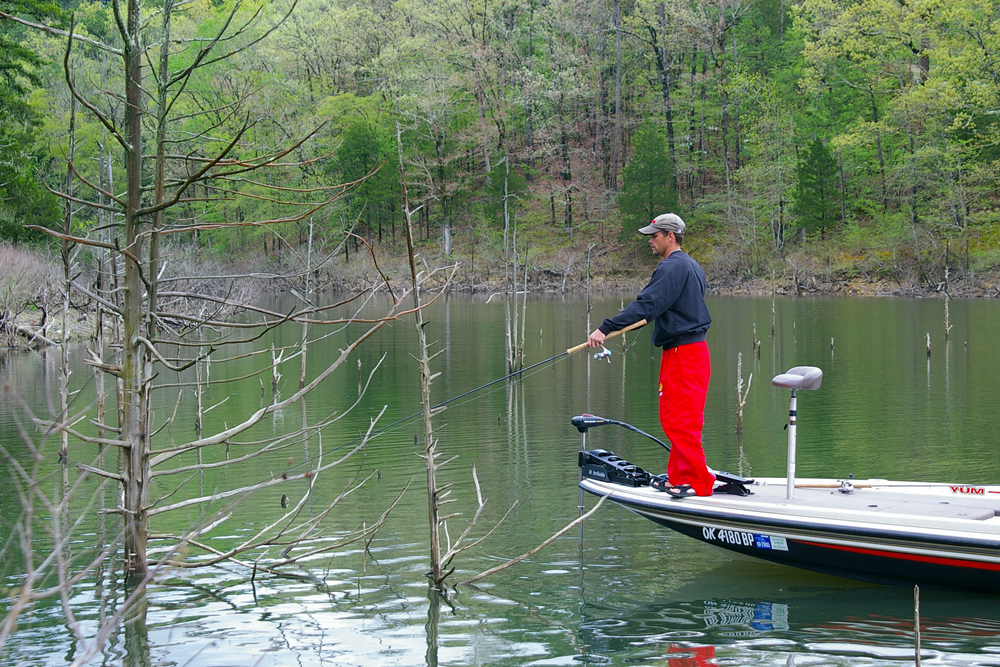
Long-pole jigging works great for catching crappie in brush and timber.
Crappie Basics: Four Simple Tips for Better Long-Pole Jigging
With Tim Huffman, MonsterCrappie.com
Fishing a jig with a long pole is one of the most effective ways to catch crappie around brush, timber and other cover. But a few simple refinements can make the technique even more productive.
Crappie book author and longtime angler Tim Huffman shared the following four tips that can help you catch more fish and detect more of the bites you might otherwise miss.
Start with a sensitive graphite pole.
Sensitivity is important when jigging because many crappie bites are subtle. A quality graphite pole transmits those light taps and changes in pressure better, helping you recognize bites that might go unnoticed with a less-sensitive rod.
Use high-visibility line.
Huffman says anglers shouldn’t worry that brightly colored line will cost them bites.
“You will get as many bites as on clear line,” he says, “but you will see more bites when your line twitches or moves sideways.”
That visual advantage can be especially important when crappie simply pick up a jig and swim off with it rather than delivering a hard strike.
Make your rod tip easier to see.
If your pole doesn’t already have a hi-vis tip, Huffman recommends painting a 1-inch band near the tip of the pole. If the rod is dark, fluorescent white or yellow paint provides plenty of contrast. That bright band makes the tip easier to see when sunlight is reflecting off the water and when you’re probing the dark interior of a brushpile late in the day.
Keep the tip close to the water.
Holding the rod tip low gives you better control of the jig and helps keep wind from causing your line to sway. That means better bait presentation and a better chance of seeing subtle movements in the line or rod tip.
None of these tips is complicated or expensive. But together, they can make long-pole jigging more efficient and help you turn more of those barely detectable crappie bites into fish in the boat.
