

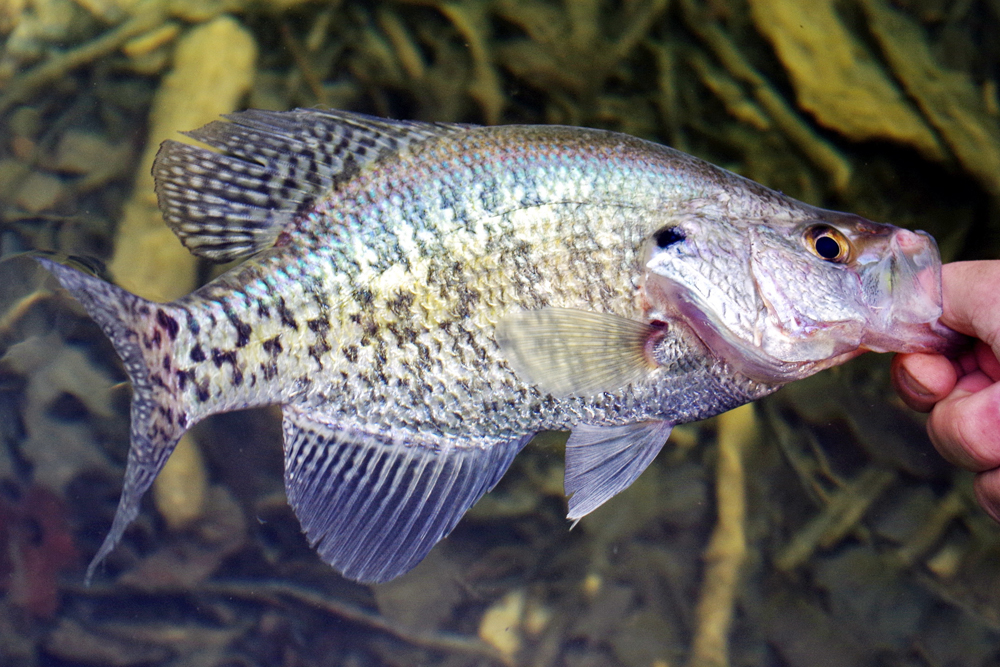
In clear water like this, anglers may have to employ several techniques
that help increase the number of crappie they hook.
Crappie Basics: Fishing Clear Water
Story and photo by Keith Sutton
Clear water can make crappie tough to catch, but the late Steve Wunderle of Cartersville, Illinois, knew several ways to tip the odds in an angler’s favor. The author of New Techniques That Catch More Crappie regularly fished 7,000-acre Crab Orchard Lake in southern Illinois, where springtime visibility often reaches 5 to 6 feet. His advice for catching crappie in those conditions remains as useful as ever.
“When water gets that clear, it’s tough fishing, but there are things you can do to tip the odds in your favor,” Wunderle explained during one of the many interviews I conducted with him over the years. “Most important is switching to light line because it’s harder for crappie to detect. I normally use 8-pound-test line in stained water, but when it gets clear, I drop down to 6- or even 4-pound-test. You have to think small in clear water—light line, light floats, small jigs. That’s one key to success.”
Keep Your Distance
Clear water gives crappie a better chance to spot anglers, too. Wunderle recommended backing away from likely fishing spots and casting rather than moving in close.
“To keep from spooking fish, you have to back off some and cast your jigs,” he said. “Sometimes I use a float with a light jig and cast past the cover, then gently jig it back or let the wind carry it over the top.”
Another option was a flipping technique that allowed him to work a jig over brush without getting too close.
“I use a 7½-foot fly rod and a small spincast reel. I pull out 8 or 9 feet of line, flip a jig out, then let it slowly tick back over the top of the brush. As soon as I feel a crappie hit, I just flip my wrist to set the hook.”
Stay Versatile
Perhaps Wunderle’s most important lesson was to remain flexible. Even though he favored jig fishing, he never relied on one presentation alone.
“I like jig fishing, but when I go fishing, I take four dozen minnows in addition to my arsenal of jigs,” he said. “During the morning, crappie will hit one or both, or they may switch back and forth. I’m going to be ready.”
He compared crappie fishing to bass fishing, where experienced anglers carry a variety of lures rather than relying on a single favorite.
“You must be versatile, whether you’re fishing muddy water, clear water, choppy water or whatever. You can’t stick with just one game plan. Crappie are just too unpredictable for that.”
It’s sound advice worth remembering. Downsize your tackle, keep your distance and be ready to change presentations when conditions demand it. Those lessons from Wunderle’s years on the water can still help anglers catch more crappie today.
(Keith Sutton of Alexander, Arkansas serves as editor of CrappieNOW and its sister publication, CatfishNOW.)
