

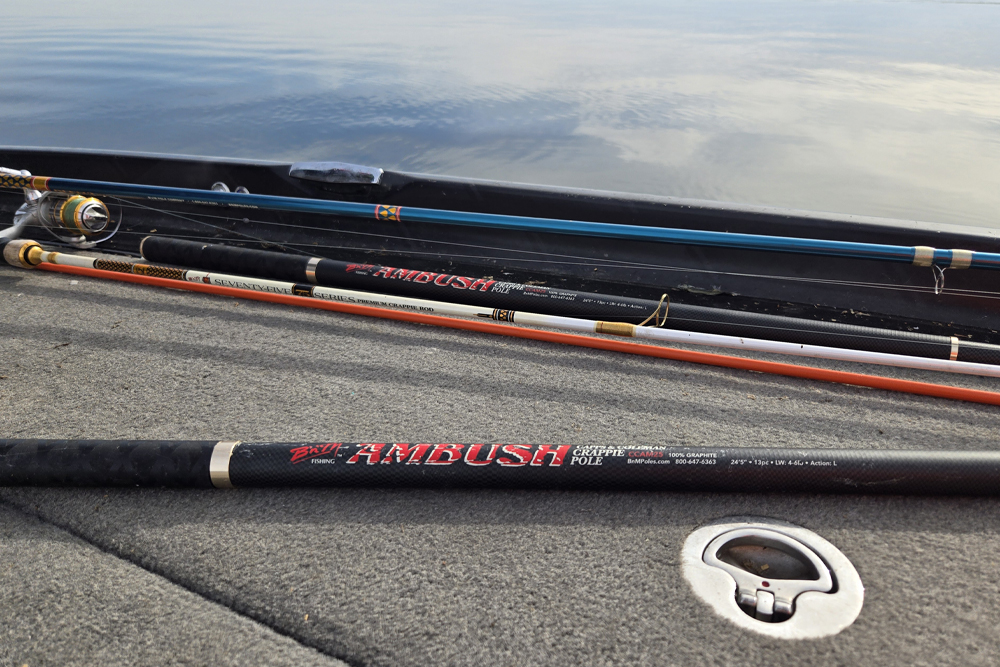
The floor of Ronnie Capps’ boat is littered with some of his most-used B’n’M
fishing rods. He advises, however, that targeting fish using the Ambush rod is
his favorite method of fishing these days. The diamond pattern on the rod
reduces the chance of water causing the rod pieces to stick together, making
the Ambush the Cadillac of telescopic rods on the market.
Ambush Crappie Fishing: Sliding to Slabs on a Telescopic Rod
Story and photos by Madalyn Roberts
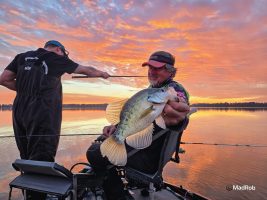
The all-time winningest team, Ronnie Capps and Steve Coleman, has been setting the standard in the crappie-fishing industry for several decades now. Although they no longer tournament fish together, they are still raising the bar in the industry with the design of advanced weaponry such as the Ambush Telescopic Rod made by B’n’M Poles. Not only have they designed the pole together, but Capps and Coleman have perfected the art of targeting crappie with it in anywhere from two to 15 feet of water.
For those who have never felt the thrill of a hookset into a healthy fish on the end of a 24.5-foot rod, it’s a completely different experience than fishing with a rod and reel combo. no matter the length of the rod. Like learning how to pull planer boards or shoot jigs, learning how to fish with a telescopic rod is another vital tool in a fisherman’s toolbox, especially for those who are using forward-facing sonar technology. The Ambush is a Japanese-style Tenkara rod made of high-quality graphite with a metal screw-in butt cap. (One pro tip regarding the screw-in butt cap: secure the cap with electrical tape to ensure all the rod pieces don’t go for a swim should the cap come unscrewed accidentally.)
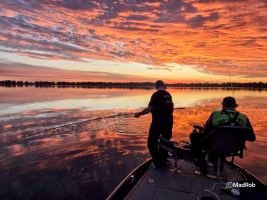
What makes the Ambush unique is that it can go from a 2.5-foot rod to a 24.5-foot rod in a matter of seconds, making that slide to reach the slab completely within reach. Capps advises the ability to adjust rod distance in a matter of seconds without having to move the boat gives a distinct advantage. There’s no doubt there are fishermen out there who may find the length of the Ambush rod to be excessive. But when conditions are tough and the wind is slapping wave after wave up against the boat, keeping distance is going to put more fish in the boat. That’s what makes the Ambush rod a lethal weapon.
Coleman first introduced me to the Ambush rod on his Reelfoot Lake stomping grounds in November of 2024, and it was love at first tug for me. Hooking a two-pounder on the end of the ultra-lightweight 24.5-foot rod is a feeling that’s simply hard to beat. Although Coleman can get a man dialed in on the telescopic rod in just a few short hours, I’ve spent several additional days since then in his Ranger perfecting the “POP POP POP” which inevitably must follow a hookset in order to get the fish in the boat.
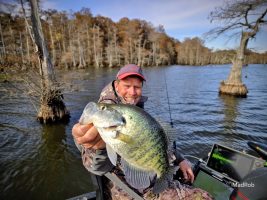
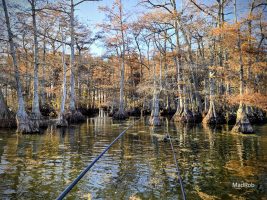
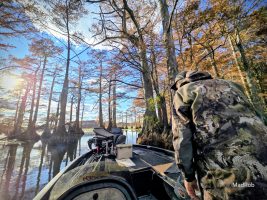
Like anything else, practice makes perfect when fishing with a telescopic rod, and while one can most certainly learn how to do so independently, I recommend getting at least one lesson from the pros on this technique. The plus side is that the lesson would more than likely require a trip to Reelfoot Lake, which was created naturally between December 1811 and February 1812 when a series of earthquakes caused the Mississippi River to temporarily flow backwards. The only natural lake in the state of Tennessee, it is a significant wildlife refuge for bald eagles and waterfowl in the region. Experiencing the magic of the sun rising or setting through the giant cypress trees on the water as eagles sore above high in the sky seemingly take one to another place and time entirely, making catching crappie a secondary joy of sorts.
I had the opportunity to fish with Ronnie Capps at the Brushpile Fishing Academy at Reelfoot Lake in November 2025, where we used the Ambush Rod in a bit deeper water. What I noticed was that the amount of line on the end of a telescopic rod makes a difference in how to maneuver it. As with any longer rod when moving bait from left to right, most times it’s best to pick the line up entirely out of the water and drop it in the desired location to get the bait in front of the fish more efficiently. The shorter amount of line, the easier it is to handle. Capps advises it’s best to keep a telescopic rod short until you need it longer. This is especially true in deeper water.
Another tip for success I learned from Capps and Coleman is that speed is your friend. The rod only extends from two to 20 feet or vice versa in a matter of seconds if the operator is quick about it, and many times it’s hard to stay on a roaming fish if you’re not. It’s also important to keep tension on the line after a hookset while ensuring the rod stays low to the water.
While the graphite material does make the rod ultra lightweight, any longer rod will start to get heavier as the number of hook-ups increases throughout the day. One way to cut down on the arm fatigue is to tuck the rod under the elbow for additional support, using gravity to work in your favor. The other way is to keep the rod between 12 to 14 feet until you need it to reach out its full length.
Following a hook-up, the Ambush has enough flexibility to boat flip smaller fish. However, as with most other rods, netting the bigger fish is always recommended. The Ambush is flexible, but every weapon has its limits. Too much pressure will cause the tip to snap. That’s why it’s important to keep the rod as close to the water as possible when bringing in a fish.
There’s good news, though, for the angler who tests the limits and breaks the tip off. Like many of their other rods, B’n’M sells replacement tips for the Ambush.
For anglers who plan to fish the Ambush in heavy brush or weeds, one last pro tip is to replace the tip entirely with one having a bit more backbone. Whether replacing a broken tip, or swapping it out for a sturdier one, it’s simple. Simply unscrew the butt cap and let the pieces slide out of the butt cap end. Then replace the tip, slide the pieces back to the other end, and secure the cap with electrical tape. Now you’re ready to go stealth mode on crappie in any season.
(Madalyn Roberts is from Kansas City, Missouri although she considers herself a southern transplant having lived in Kentucky for 17 years. She serves her Louisville community by working for a non-profit organization facilitating free home repairs for elderly and disabled homeowners. In her spare time, she enjoys being in the outdoors in all capacities most especially fishing, hiking and camping.)
