

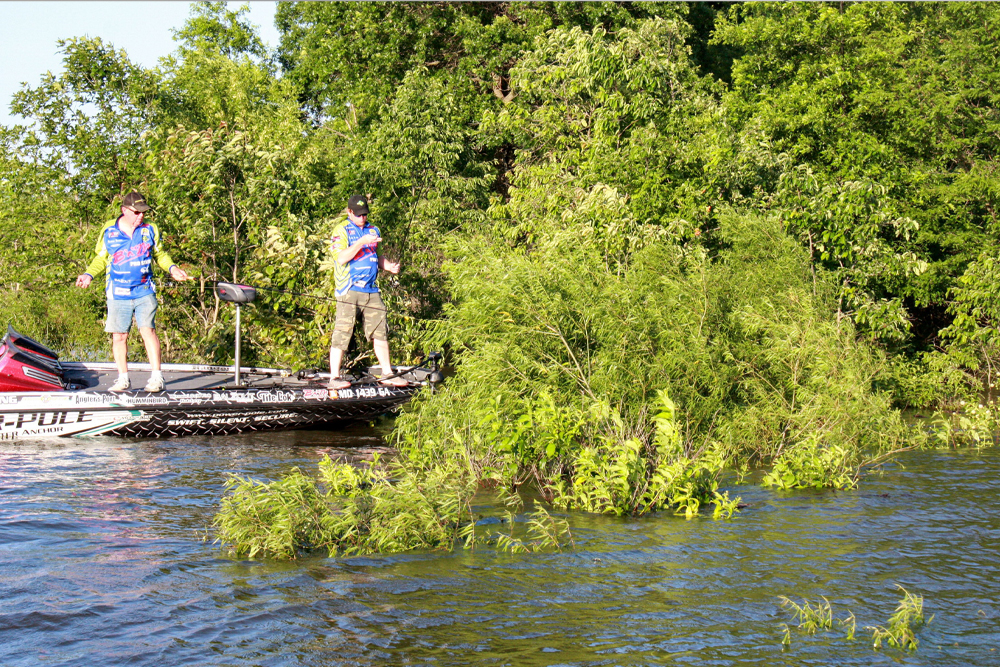
Several years ago, on a trip to Truman Lake in Missouri,
high water had scattered crappie. Crappie found protection
and food in thick, flooded, green vegetation. Seen here are
crappie pros Travis and Charles Bunting probing the thick
limbs of willow trees and surrounding submerged brush.
Battling High Water
Story and photos by Tim Huffman
Fishermen have faced many spring high-water conditions during the past decade. High-water spring events will continue to happen. Lake conditions and fish movements change during a rise or fall of high water, so how a fisherman adjusts to changing water conditions and crappie patterns determines whether the livewell is empty or full.
Look In Shallow Water
It seldom fails that high water in the spring or summer moves crappie into very shallow water. Crappie like freshly flooded cover for protection and a good food supply. On a trip with Travis and Charlie Bunting on Missouri’s Truman Lake, the team was fishing in the limbs of flooded willow trees, where cover was thick and water was clearer due to filtering by the leaves. Whether looking for food, warmer water or just to get into cover, crappie were in the shallow-water covers at or above the original shoreline.
Look in Slack Water
High water creates current. Creeks, rivers and even the main lake will have current as water rises and as water leaves a lake. Crappie will seek calm areas like coves, backwaters and large flats where currents are less.
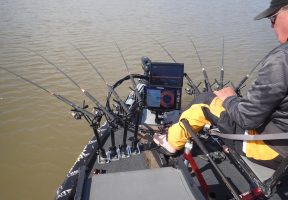
River fish also prefer calm water, like an eddy. An eddy has slack and reverse current areas away from strong main currents.
Fish Higher in the Water Column
Fish may stay near an old shoreline in mid-depth water. Muddy water restricts visibility, so it’s not uncommon for fish to suspend high in the water column. For example, a crappie in eight feet of water may be one to three feet under the surface. It’s a matter of getting more light penetration and maybe warmer water. Try different depths until you learn the best one.
Find Clearer Water
Rising water can bring mud and different pH waters into a lake. At the start of heavy rains and water rising, try the main lake. The main lake will be the last to get muddy. When rains stop, the backs of creeks and rivers will be the first to clear. Fish often prefer the clearer water, so get as far back into the creeks as possible.
The Right Presentation
Jigging is the right method for crappie hiding in shallow water. A pole should be long enough to avoid spooking crappie but short enough for fishing under overhanging limbs or in dense brush. Therefore, a good pole length compromise should be selected, often 10-13 feet long. Bait presentations should be super slow. Baits left still for a while have the best chance to get a hit. Forward-facing sonar is ideal in areas deep enough to easily use the system. The tactic works in cover and open water.
Slow trolling is good in locations where crappie are suspended up in the water column. Moving the boat at a snail’s pace of 0.1 mph puts baits in front of crappie, gives them the opportunity to see the bait and let’s them decide if they will bite. Bites are often so soft they are difficult to detect.
A slip float and minnow rig is a way to keep a minnow at a specific depth. The rig can be used on a long pole in cover or on a spinning outfit for pitching to more open areas. Slow or stopped is better in stained and muddy-water situations.
Use the Right Baits
Minnows work in muddy water. Experts believe crappie can feel the vibration of an active minnow. Also, a minnow is good when used to tip a jig. A jig adds color, an important factor when fishing stained or muddy water. A single jig is best when probing dense cover. Top color picks in muddy water include orange, chartreuse, yellow and black. A combination of two colors is best. It’s also important to use a good scent attractant when using a jig.
Review & Tips
- Look for good, heavy cover that’s newly inundated by flood water. Or try fishing over the old shoreline while looking for fish suspended up in the water column.
- Find areas with little or no current. Lake coves and backwater areas are good. Top picks in rivers include backwater areas and eddies.
- Shallow, muddy water can warm quickly in the spring. Look for northern and northwestern coves to receive the most sun and southern breezes. Fish and baitfish like the warmer water. Therefore, a bright sunny day may be the best condition for muddy-water crappie.
- Visibility is low when water is stained or muddy, so fish will use what sight they have, along with paying attention to sound, vibration and scent. Increase odds for a bite by using dark jig colors, an active minnow and a good scent/attractant.
- Rule of thumb for fishing a strong front: Before the front, water is stable and the barometer is falling, so fishing is good. You should not fish during a storm with lightning or high winds, but fishing often remains good. Soon after major rains, a lake rises, becomes stained and the barometer is high, creating difficult fishing. However, several days after the front, when water and the barometer stabilize, fishing starts improving. Water that remains high for a while will clear, and fishing can be very good. But fish have more water, so they will be scattered and more difficult to find. When water rapidly falls, fishing is tough. Don’t keep fishing shallow because crappie move off the bank to cover on nearby drops and flats.
High water creates difficult fishing situations, but crappie don’t quit biting for weeks at a time. Use good strategies, lower your expectations in bad conditions, catch a few fish and enjoy your day on the water.
(CrappieNOW senior writer and Fresh Water Fishing Hall of Fame member Tim Huffman has several books, including his newest, Papermouth, Modern Fishing Techniques, available in Kindle or paperback on Amazon, or from his website, www.monstercrappie.com.)
