

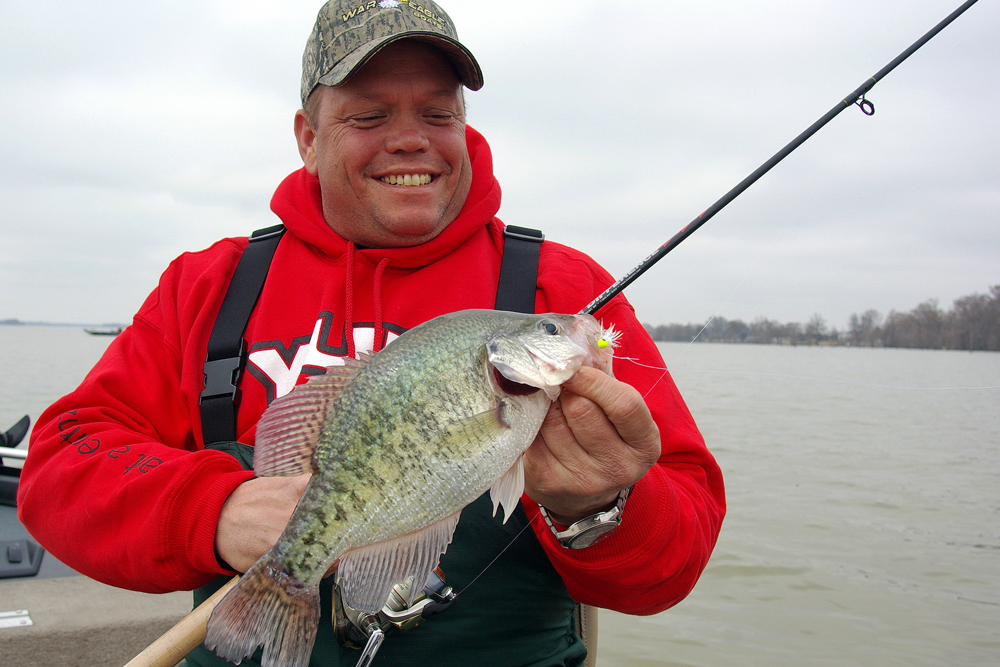
November is prime time for catching slab crappie. Knowing where fish
move as water temperatures fall can help beginners find more of them.
Crappie Basics: Finding and Catching Crappie in Cold Weather
Story and photo by Keith Sutton
November can be one of the most productive months for crappie fishing. As summer’s heat fades and water temperatures drop, crappie begin changing their habits, often moving into locations where they can feed heavily before winter arrives. For anglers who know how to follow these seasonal movements, some of the year’s biggest catches may be just around the corner.
But if you’re new to crappie fishing, figuring out where the fish have gone can be confusing. The good news is that you don’t have to be an expert to find them. Understanding a few basic principles will put you on the right track.
Follow the Baitfish
Crappie are predators, and much of their movement is related to the movements of the small fish they eat. In fall, schools of shad and other baitfish may move toward creek channels, coves and other areas where food is abundant.
Crappie often follow these schools, sometimes suspending beneath or alongside them. That’s why paying attention to baitfish is one of the most important things you can do when searching for fall crappie.
If you’re fishing from a boat equipped with electronics, watch for schools of baitfish and larger marks nearby. The larger marks may be crappie, although electronics won’t always tell you exactly what species you’re seeing.
Don’t have electronics? Look for diving birds, surface disturbances and other signs of feeding activity. These clues can help you locate baitfish and the predators following them.
Look Along Creek Channels and Structure
As water cools, crappie often concentrate along creek channels, submerged points, channel bends and other underwater features. These locations provide travel routes and places where baitfish may gather.
Brushpiles, submerged trees, standing timber and artificial habitat also attract crappie. If you know where these structures are located, they’re good places to begin your search.
In shallow lakes, you may find crappie around brush and vegetation in relatively shallow water. In deeper reservoirs, fish may be suspended over much deeper water, particularly when following schools of shad.
Remember, crappie don’t necessarily stay on the bottom. They frequently suspend at a particular depth, sometimes several feet above submerged cover. When you find fish, pay attention to their depth. That information can help you catch more.
Slow Your Presentation
One mistake beginners sometimes make is fishing too fast. As water temperatures fall, crappie may become less willing to chase a fast-moving bait. A slower presentation often gives them more opportunity to strike.
Small jigs are excellent choices. A 1/16-ounce jig is a good starting point, but lighter or heavier models may be needed depending on water depth, wind and current.
Try casting a jig around brushpiles, submerged trees and other likely holding places. Allow it to sink to the depth where fish are located, then retrieve it slowly with occasional pauses. Avoid moving the bait too quickly.
Vertical jigging is another effective approach, particularly when crappie are holding around deep structure. Lower the jig to the fish’s depth and hold it nearly motionless, occasionally giving it a slight twitch. Crappie sometimes strike a bait that appears almost motionless.
Live minnows are another dependable option. Hook a small minnow through the lips or just behind the dorsal fin, depending on how you’re fishing. Suspend it beneath a bobber around shallow cover or use a slip-float rig when fishing deeper water. Adjust the depth until you find where crappie are feeding.
Be Willing to Experiment
Fall crappie can be scattered, and what works one day may not work the next. If you’re not getting bites, don’t spend the entire day fishing the same spot with the same bait at the same depth.
Try changing locations, depths and presentations. If fish are holding close to brush, fish near the cover without getting your jig tangled in it. If they’re suspended over deeper water, try matching the depth where they’re holding.
Color can make a difference, too. Start with natural-looking combinations when the water is clear and brighter colors when visibility is limited. If one color isn’t producing, experiment with another.
Make the Most of November
November fishing can be especially rewarding because crappie often feed aggressively during seasonal transitions. But successful fishing isn’t simply a matter of throwing a jig into the water and hoping for the best.
Look for baitfish, concentrate on productive structure, determine how deep crappie are holding and present your bait at that level. These simple steps will help you understand what’s happening beneath the surface and improve your chances of catching fish.
Most important, don’t be discouraged if you have to move around to find them. Locating crappie is often the biggest part of the battle. Once you discover where they’re feeding, you may find yourself enjoying some of the year’s finest crappie fishing.
(CrappieNOW editor Keith Sutton is the author of “The Crappie Fishing Handbook,” a 198-page, full-color paperback full of helpful information for anyone who pursues America’s favorite panfish.)
