

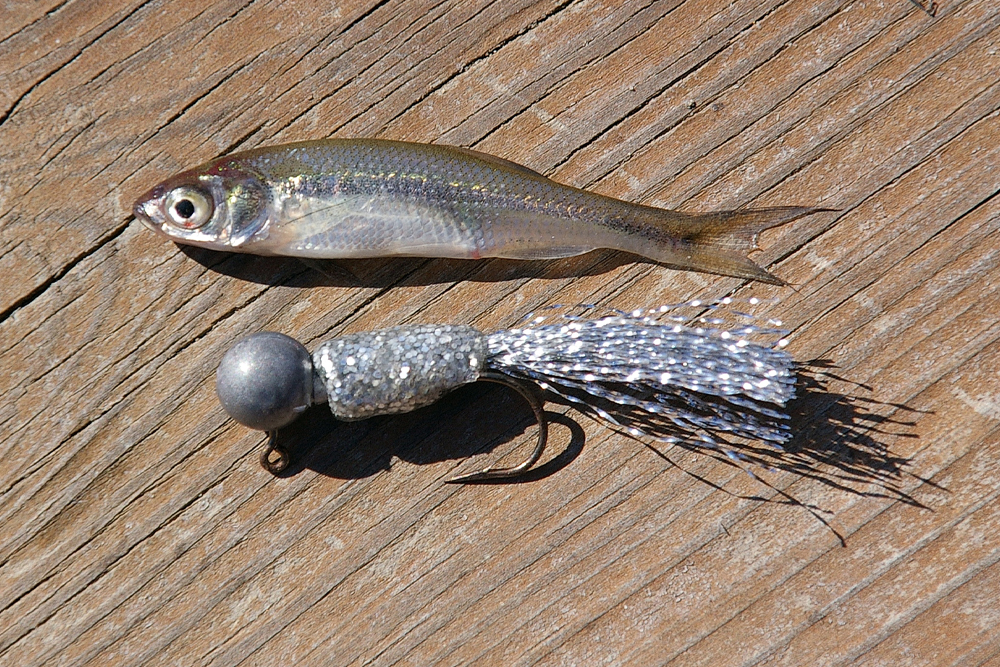
Matching your jig to the size and shape of the main crappie forage can greatly increase your number of hookups.
Crappie Basics: Match the Hatch for More Crappie
By Keith Sutton
One of the simplest ways to improve your crappie fishing is to give the fish what they’re already looking for. That means matching your jig to the size and general shape of the forage crappie are feeding on.
If 2-inch minnows make up a big part of the crappie diet in the lake you’re fishing, for example, a 2-inch jig is a logical choice. If the fish are eating tiny shiners, you’ll probably do better with a smaller offering. The same principle applies when shad, fathead minnows or other forage dominate the menu.
Many expert crappie anglers believe matching lure size and profile can be even more important than choosing the right color. You can have the hottest color in your tackle box, but if your bait looks nothing like what the crappie are eating, you may be making things harder than they need to be.
So how do you know what size and shape to use? Look inside the fish.
When you catch a crappie, especially one with a full belly, take a look at its stomach contents. You may find a clue to exactly what the fish have been feeding on. If the stomach is packed with 2-inch shiners, for instance, try a jig of similar size and shape. If you find tiny baitfish, downsize accordingly.
Keep in mind that forage can change from one body of water to another, from season to season and sometimes even from one day to the next. That’s why there’s no single jig size that always works best.
Pay attention to what the crappie are eating, then match your presentation to the prevailing forage as closely as practical. Sometimes the best bait in your tackle box is simply the one that looks most like what’s already on the menu.
(CrappieNOW editor Keith Sutton has been an avid panfish angler for more than 50 years. Autographed copies of his book, The Crappie Fishing Handbook, are available on his website.)
