

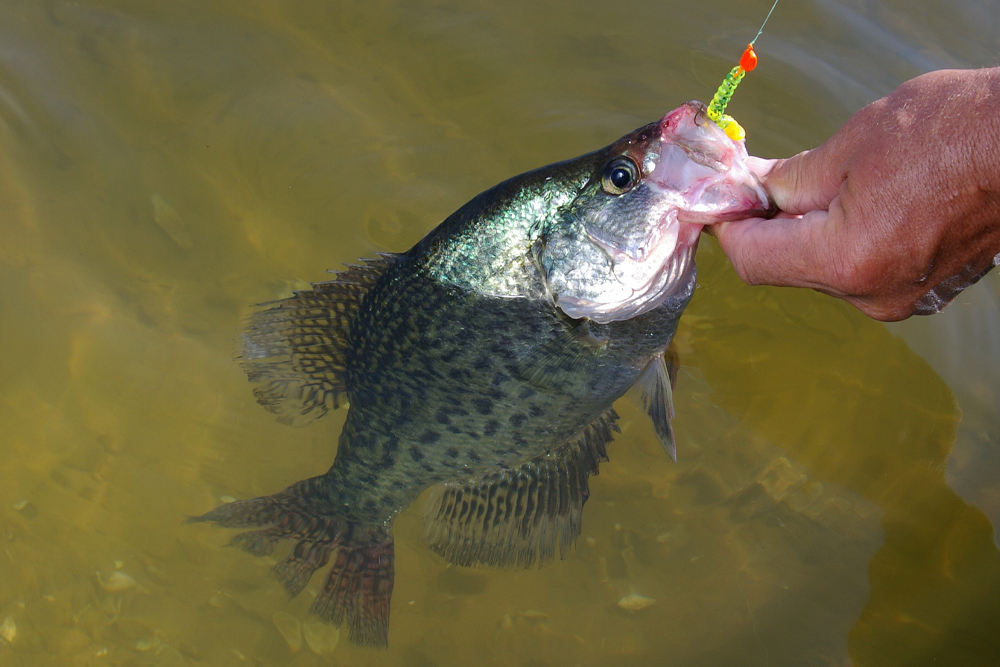
Right in the strike zone—this crappie couldn’t resist a weedless slider slipped through heavy cover.
Crappie Basics: Slider Time
By Keith Sutton
Catching crappie in the latter weeks of spring isn’t always easy. When the water warms, they slide into the thickest cover they can find—brushpiles, laydowns, stump fields and shoreline weeds. That’s great for the fish. Not so great for anglers tired of breaking off jigs.
One simple solution has stood the test of time: the Charlie Brewer Weedless Crappie Slider.
Think of it as the crappie world’s answer to a weedless bass worm. Rigged correctly, the hook point is lightly embedded in the soft-plastic body, allowing the bait to slip through gnarly cover with minimal hang-ups. It’s a small adjustment that opens up big opportunities, especially when crappie are buried where other lures can’t go.
Presentation is straightforward but versatile. Cast-and-retrieve works well when probing scattered wood or weed edges. A slow, steady swim keeps the bait in the strike zone while allowing it to tick cover without snagging. Around heavier brush, fish it more like a traditional jig, lifting and dropping it through openings in the cover. And when crappie are holding in pockets within weedbeds, suspend it beneath a slip float and let it hover right in their face.
Color and size matter less than placement and movement, but natural tones and small profiles are a safe starting point this season. The key is confidence. Once you realize how effectively a weedless slider comes through cover, you’ll fish places you used to avoid.
That’s where the magic happens.
When crappie tuck into their spring hideaways, the anglers willing to go in after them—without constantly retying—are the ones who come out ahead.
(CrappieNOW editor Keith Sutton enjoys sharing his knowledge of crappie fishing. His articles on the sport have appeared hundreds of times in magazines online and in print.)
