

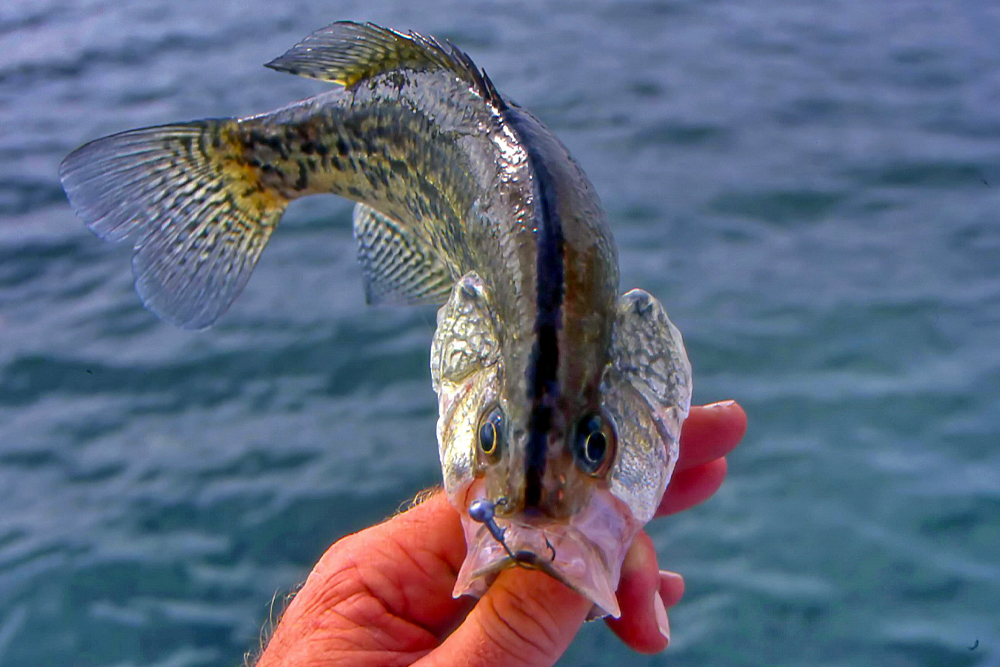
That unmistakable stripe is the calling card of a blacknose crappie.
Crappie Basics: What Crappie Is That?
Story and photo by Keith Sutton
In many waters, anglers catch crappie that have a dark brown or black stripe running under the chin, over the nose and across part of the back. These beautifully marked fish, often considered a special prize for the crappie fan, are called “blacknose crappie.” Other names include black-throated crappie and brown-nosed crappie.
Several stories have been propagated to explain the origins of these fish. Most folks believe they are hybrid fish, a cross between black crappie and white crappie. Others believe they are juvenile crappie that will lose the black stripe with age.
In fact, blacknose crappie are simply an unusual color strain of the black crappie. They were first described in Ohio in 1957. A later study reported they had been found in 13 states.
One of those states was Arkansas, where blacknose crappie turned up in Beaver and Bull Shoals lakes. Some of those fish were transported to an Arkansas state fish hatchery in the 1960s, where biologists learned how to propagate the strain and produce blacknose crappie by design rather than accident.
This distinctive crappie is now being raised in state fish hatcheries for stocking public fishing waters throughout the country. Because the blacknose is easily recognized even by untrained observers, it has proven valuable for studying crappie management strategies in lakes where it has been introduced.
Although blacknose crappie look different, they behave much like any other black crappie once they’re in the water. They prefer clear to lightly stained lakes and reservoirs, often relating to brush, standing timber, docks and other cover.
Anglers catch them using the same techniques and tackle they would use for traditional black crappie—small jigs, minnows and spinners all work equally well. The black stripe does not appear to affect feeding habits, growth rate or overall catchability, making blacknose crappie more of a visual curiosity than a different fishing challenge.
For anglers, the most noticeable difference is simply how easy blacknose crappie are to identify. That bold stripe remains visible throughout the fish’s life, allowing anglers to quickly recognize them in the livewell or at the cleaning table. Fisheries biologists value this trait for the same reason, using blacknose crappie to track survival, movements and population trends in stocked waters. For the crappie angler, catching one adds a touch of uniqueness to the day—proof that sometimes nature adds a little extra flair to an already popular sportfish.
(Seventy-year-old Keith Sutton started crappie fishing in the Mississippi River oxbow lakes of Arkansas at the age of 10. His articles about these popular sportfish have appeared in hundreds of magazines.)
