

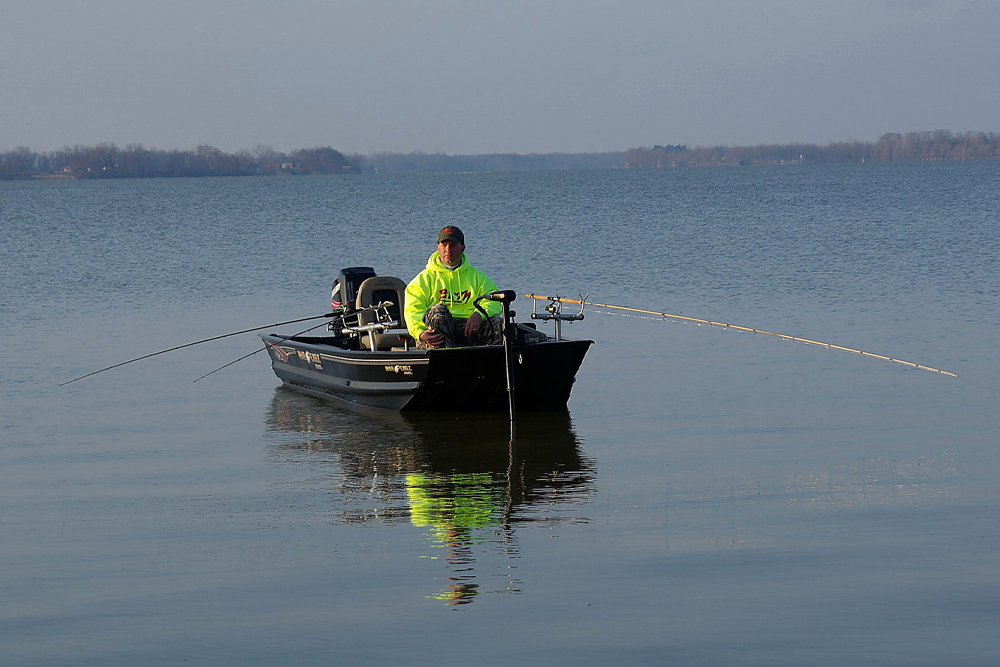
Deadstick discipline: No twitching, no jigging, no fuss. Just cold steel nerves and a big dose of patience.
Fishing during periods of total calm makes employing the technique easier.
Deadsticking: Cold-Water Jigging Without Moving a Muscle
Story and photos by Keith Sutton
When water temperatures drop below 50 degrees, crappie anglers often respond in two ways: they either hang up their rods until spring, or they keep fishing but slow their presentations to a crawl. Those who do the latter are on the right track. And those who go a step further and deadstick their jigs? They’re often the ones heading home with a limit.
Deadsticking—simply holding your bait still—is as old as fishing itself, but it’s one of the most underused cold-weather tactics in the crappie world. When used right, it can outproduce fancy electronics, expensive rigs and even live bait. In winter, crappie aren’t chasing anything. If your jig’s dancing around like it’s had too much coffee, you’re probably overdoing it.
Here’s how to master the deadstick approach and put more crappie in the boat when the bite seems non-existent.
The Science Behind Stillness
Crappie metabolism slows dramatically in cold water. A fish that darted three feet to crush a jig in October might not move three inches in December. But their need to eat doesn’t vanish; it just changes.
Winter crappie tend to suspend and sulk. They group tight, move little and feed conservatively. That’s where deadsticking shines. A perfectly still jig, hanging right in their strike zone, gives them a no-effort snack they can’t ignore.
Finding the Right Spot
Deadsticking requires precision. You can’t just dangle a jig in any old water and hope for the best. You need to find crappie first, and that usually means deeper structure, vertical cover or channel drops near flats. Good winter targets include deep brushpiles, standing timber in 15 to 30 feet of water, creek channel bends, bridge pilings and steep bluff banks.
If you’ve got electronics—especially forward-facing sonar like LiveScope—you’re ahead of the game. But even without it, working known winter spots slowly and vertically can get results. When in doubt, fish slow and deep.
Gear for Deadsticking
This is one technique where less is truly more. Your gear should be suited for sensitivity and control.
Rods: Use a long, light or medium-light rod with a sensitive tip. A 10- to 14-footer lets you reach over cover and hold your bait without spooking fish. The rod should be stiff enough to hold steady but soft enough to detect the subtle “tick” of a cold-water bite.
Reels & Line: A spinning or spinning-style reel spooled with 4- to 6-pound test fluorocarbon or mono works well. Fluoro gives you extra sensitivity and sinks faster, while mono has a bit more stretch, which can help if fish are nipping the bait. Braided line can work, too, but you’ll need a fluorocarbon leader in clear water.
Jigs & Plastics: For deadsticking, small is king. Think 1/64- or 1/32-ounce jigs with natural-colored soft plastics. Straight tails, tiny tubes and hair jigs all fit the bill. Shad, silver, gray or smoke-colored bodies mimic winter forage best.
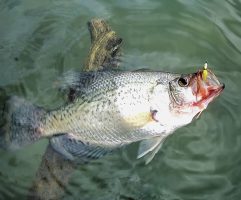
The Technique: Hold Still, Catch More
The biggest mistake most crappie anglers make in winter is doing too much. Deadsticking means you put that jig where it needs to be and then stop moving it. No twitching, no bobbing, no lifts and drops. Just hold it. Here’s a step-by-step method:
- Drop the jig to the depth crappie are holding. If you’re fishing over brush in 20 feet, start at 18 and adjust from there.
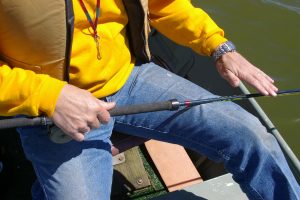
- Keep your rod tip steady. You can place your pole in a rod holder, rest your hand on a rail or brace your forearm if you’re in a boat. In a kayak or from the bank, anchor your elbow against your knee or thigh to eliminate shake.
- And I mean really wait—30 seconds to 2 minutes, depending on the bite. This isn’t active fishing. It’s patience fishing.
- Watch for anything. In winter, bites may be ultra-subtle. The line might twitch, go slack or move just a hair. Set the hook on anything suspicious.
- Adjust depth and location. If no bite comes after a few minutes, raise or lower the jig a foot, or move to the next piece of cover. Don’t abandon the tactic. Just fine-tune your approach.
Deadstick Variations That Still Work
Double Jig Rigs: Run two small jigs 12–18 inches apart to increase odds and cover more water vertically. Sometimes a fish will rise to one jig while you’re watching the other.
Float-Deadstick Combo: In shallow water or off docks, use a slip float to suspend your jig and hold it still. Add a tiny split shot if needed to keep the bait in place during windy conditions.
Boat-Control Deadsticking: On windy days, using Spot-Lock or anchor modes on trolling motors keeps you precisely over structure. Without it, try tying off to trees or using manual anchors.
When to Move, When to Stay
Deadsticking requires a mental shift. You’re not covering water. You’re camping in a fish’s living room. That means being methodical, deliberate and confident.
If you’ve had success in one spot, don’t assume the bite’s dead if it slows. Winter fish often feed in short flurries. Wait them out or let a spot rest a while then come back.
If these strategies aren’t producing bites, it’s time to reposition. Move a few yards and repeat. Precision is everything.
One Final Tip: Trust the Stillness
It takes discipline to sit still with a jig and do nothing. You’ll be tempted to twitch it “just a little.” Don’t. The biggest fish often hit when your bait has been sitting still for a full minute or more.
Once you experience that soft “tick” or see your line twitch ever so slightly—after 90 seconds of nothing—you’ll understand the magic.
So next time the air’s sharp, the water’s cold and your fingers are stiff, remember this: don’t chase them. Deadstick them and let the fish come to you.
(CrappieNOW editor Keith Sutton is the author of “The Crappie Fishing Handbook,” a 198-page, full-color paperback full of helpful information for anyone who pursues America’s favorite panfish.)
