

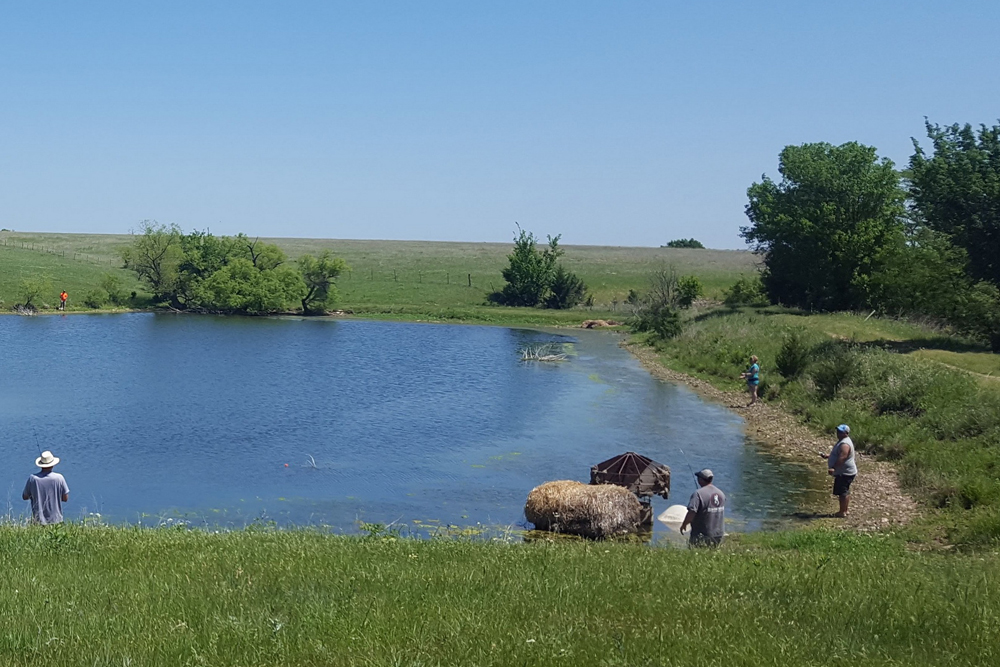
Small farm ponds can produce big crappie with proper management.
Farm Pond Crappie
By Brent Frazee
Photos courtesy of Jason Harris
You won’t find Jason Harris’ favorite crappie-fishing spot on the Kansas state map.
He fishes reservoirs such as Council Grove, Melvern and Pomona, especially in the winter. But when he wants to catch a big fish, he walks out his back door and heads to a small farm pond on the land he and his wife Angela own.
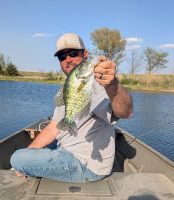
Get this. He meticulously measures the black crappie he and his family catch, and they average 14 inches in length.
“We don’t catch numbers of fish that big at the reservoirs I fish,” said Harris, 47.
So, what’s his secret for success? He manages his ponds for crappie, not bass.
“I don’t really care about catching bass,” he said. “We’re crappie fishermen.”
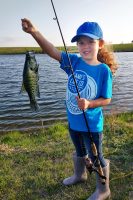
It’s no accident that many of the 10 farm ponds on his land contain big black crappie. Harris puts in the work to tilt the odds in his favorite fish’s favor.
It’s textbook management for what it takes to grow big fish in a small body of water.
Mother Nature provides the first part. In Harris” favorite pond, there are two springs that feed the small body of water so that it stays clear most of the year. That inflow also keeps the pond from going dry during periods of drought.
It has flats for the crappie to spawn and deeper spots for them to escape the extremes of summer and winter. A large population of small bass keep the crappie numbers thinned down. And Harris suspects that the bass fry also add to the crappie’ forage base.
Harris provides the other factors. He sinks habitat such as brush, rock piles and PVC structures regularly. He also uses harvest as a management tool, taking a limited number of fish out each year so that the pond remains in balance.
It’s a fine line, especially in a small body of water. But Harris proves it can be done.
Managing for Big Crappie
Kansas has more than 10,000 private farm ponds, and most anglers fishing them target either bass or channel catfish.
The Kansas Department of Wildlife and Parks (KDWP) recommends against stocking crappie in small ponds, mainly because they can overpopulate and stunt. But there are exceptions, as Harris has proven:
- Black crappie, not white, should be stocked. They are less prolific and do better in small bodies of water.
- High densities of 8- to 15-inch bass are a key to keeping the crappie population from growing too large, according to the KDWP. They feed heavily on small crappie.
- Clear water also is important. KDWP recommends underwater clarity greater than 18 inches to aid bass in locating their prey.
- A mix of depths also is important. Crappie seldom do well in shallow basins with little depth change.
- Maintaining a healthy forage base is another key. Crappie feed on anything from small minnows to fry from other species to insects. Avoid stocking shad, which can grow quickly when they escape predators and take up needed biomass in a small pond.
- At least moderate harvest of crappie also plays a part, again to keep the pond from becoming overcrowded.
- Rooted aquatic plants along banks provide excellent cover. They not only provide ambush habitat, they also attract insects, invertebrates and small panfish.
- Sink crappie beds or PVC structures at various depths to give crappie feeding stations or ambush points.
The wild card is the weather. Drought or floods can have a great effect on small bodies of water and the fish that live there, often causing landowners to start from scratch again.
But as long as conditions are stable, they can produce some great crappie fishing.
A Family Pond
Harris, his wife Angela and their nine-year-old daughter Bristol love to fish together and eat a portion of what they catch.
Bristol has fished since she was three and already is a veteran crappie angler. The family usually sticks to artificials such as Bobby Garland grubs or Mister Twister curly tails, casting them out near cover and slowly retrieving them.
The best fishing takes place in March and April before the vegetation gets too thick and again in October and November as the vegetation dies off and the water cools.
The ponds have been in the family for years. Harris remembers fishing the small bodies of water 20 years ago when he was dating Angela and the land was owned by her father.
After Jason and his wife married, they moved to Coffey County for a while. But Angela’s father wanted to transition into retirement and sell his farm to Jason and Angela to keep it in the family. He still fishes his old place and takes pride in the continued good fishing the ponds produce.
Meanwhile, Harris is excited to see his work managing the ponds pay off.
“A lot of people ask to fish our ponds, but I have to turn them down,” Harris said. “We keep them pretty much for family and some friends.
“If we started letting a lot of people on here, I don’t think it would take long for the fishing pressure to have an effect on the crappie population.”
(Brent Frazee is an award-winning writer and photographer who is older than some of the reservoirs he writes about. At age 75, he still is building his resume. He spent 36 years as the outdoors editor of The Kansas City Star before retiring in 2016. He continues to write for websites, magazines and newspapers when he isn’t fishing.)
