

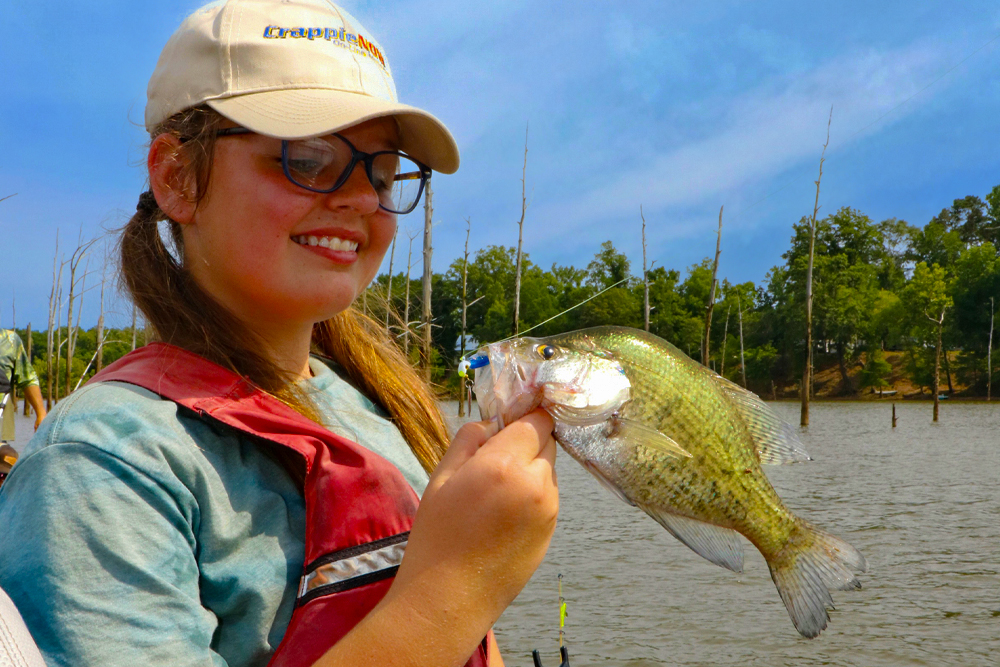
The grin tells the story. Spring is the perfect time to get the family out to
enjoy time on the water. Khloe Moe displays an Alabama crappie.
Prespawn to Post-Spawn Transitions
Story and photos by Tim Huffman
Fun awaits fishermen who solve the puzzle of finding crappie from before the spawn to after. The transition through one phase to another might be difficult to figure out, but there are tips and ideas to help you get in on the action this spring.
Prespawn
The first transition crappie make is from winter homes up to prespawn holding areas. This transition starts as waters begin to warm and sunlight hours lengthen. Movements may begin in a river channel in 20 feet of water, into mouths of creeks at 15 feet and into eight- to 12-foot shallow drops and flats near spawning areas. Fish will hold in the eight- to 12-foot water until water conditions are right for spawning.
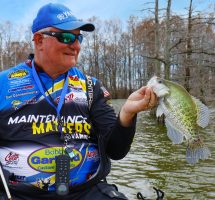
Crappie expert and tournament fisherman “Crappie Dan” Dannenmueller says it’s important for fishermen to understand there are many variables from prespawn to post-spawn. Warm weather one year and cold water the next changes spawning timetables. Also, water clarity, type lake and weather conditions can quickly change. However, there are general tips that help to find and catch transition crappie.
“Many winter fish will be in deep water or near deep water,” says Dannenmueller. “Late winter warming spells and longer daylight hours let fish know it’s time to start moving toward shallow water. The progression will include moves to creek channels, large flats and bays with cover. It may take fish two weeks to over a month to travel from deep to shallow water. Use a logical search to find fish, like from deep water to shallow. I usually start at 15 feet and work toward spawning areas.
“Crappie continue to move up to what most fishermen call holding or staging areas. These areas may be something as simple as a small drop-off or a flat with stumps, usually eight to 12 feet of water. Fish can be caught with forward-facing-sonar, but traditional methods like spider-rigging and casting work great, too.”
Spawn
Prespawn fish will stay in staging areas until water gets to around 55 degrees. Males start filtering in shallow to find spots for laying eggs. During this time, fish can be found scattered in shallow water, but most fish, including all the females, are out in water around eight feet deep. The ideal spawning temperatures are 55 to 64 degrees.
“This is an ever-changing period,” says Dannenmueller. “A cold front can cool water and move the spawn backward for several days or a week. Heavy rains and muddy water are likely this time of year. Everything starts again as the water stabilizes and warms back up. The opposite can happen where weather is unusually warm, and spawning happens faster than expected. Fish movements happen quickly in the spring.
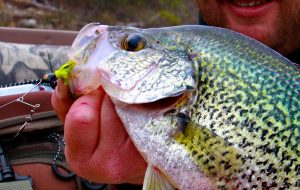
“Male crappie are the first to come into the spawning spots. The shallow-water males can be caught by casting a free-fall jig or a jig-and-float or minnow-and-float combo. Depth is often two to four feet deep. Females and males can still be caught in the staging area eight-foot holding area by casting, spider-rigging or other methods.
“The next step is the spawn. Males are shallow, and females come to lay eggs. They may lay eggs with several different males, likely nature’s way of ensuring some eggs get fertilized with good genes. Females come in but only for an hour or two each time they lay some eggs. Stick with casting because it’s fun and a great way to keep a distance from the fish to avoid spooking them.
“There is no perfect answer for how long a spawn will last. I’ve seen river fish spawning in May in mid-70-degree water. Other times the spawn only lasts a short time. Northern fish start later than our southern fish so will end later. Weather factors are the key to the length of a spawn.”
Post-Spawn
The spawn ends, now what? Crappie move out to mid-depth water. It takes a crappie about two weeks to rest and recover from the stresses of spawning. They don’t want to eat while resting, therefore, the bite is tough. However, not all fish spawn at once so there are usually at least some fish rested and ready to eat. When most fish are recovered, the bite is excellent.
“Post-spawn fish will be anywhere from six- to 14 feet deep,” says Dannenmueller. “I like to look along creek channels, bends and large flats. It’s a great time to pull jigs or crankbaits. These techniques cover a lot of water, so it helps a fishermen find the most active fish. Jigging and forward-facing sonar works when a fisherman targets crappie in wood cover.
“Fishermen are often scared when they hear the word ‘transition,’ but it’s simply a fish movement from one area to another. Fish are either shallower or deeper, so finding them is a matter of looking and finding.”
Dannenmueller’s Tips & Notes
- Spawning depths are normally two to four feet deep. However, rough weather or water conditions can push them as deep as 10 feet. Ultra-clear water fish will often spawn 12 feet and deeper.
- Fish have different personalities just like humans. A crappie’s preference may be to spawn a little deeper or shallower and at a slightly different time than other fish.
- Transitioning into spawning areas usually includes northwest banks because they block northern winds and catch southern sun, so they warm faster and draw more baitfish.
- Warmer days and nights are key for triggering fish to spawning shallows. Several days of warmer weather can trigger heavy spawning action.
- Spring can include great fishing, but be aware that cold fronts and wind can create tough fishing situations, especially when fish are shallow.
(CrappieNOW senior writer and Fresh Water Fishing Hall of Fame member, Tim Huffman, has several books, including his newest, Papermouth, Modern Fishing Techniques, available in Kindle or paperback on Amazon, or from his website, www.monstercrappie.com.)
