

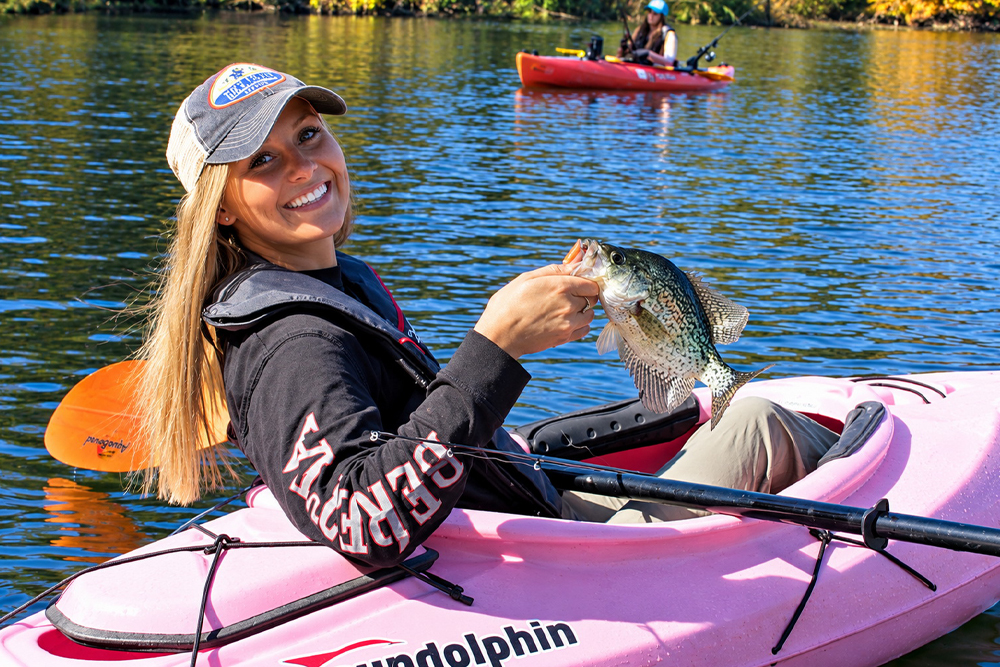
Fall crappie are popular targets for many Kansas anglers at locations like
beautiful Fall River Lake. (Photo courtesy of TravelKS.com)
Six Fall Crappie Lakes You May Not Know About
By Keith Sutton
Ask a dozen serious crappie anglers where they would go for a fall fishing trip, and chances are you’ll hear many of the same names.
That’s understandable. America’s famous crappie lakes earned their reputations.
But there’s something to be said for heading someplace different.
Fall may actually be the best time of year to explore an unfamiliar lake. The summer boat traffic has disappeared, temperatures are comfortable, and cooling water puts crappie into a feeding mood. In many waters, fish also become easier to locate as they relate to predictable structure, baitfish and migration routes.
So instead of revisiting the same famous destinations, consider putting one of these lesser-known waters on your November travel list.
Fall River Lake, Kansas
Kansas may not be the first state that comes to mind when planning a crappie vacation, which is exactly why Fall River Lake deserves consideration.
Located in the Flint Hills of southeast Kansas, this relatively modest-sized reservoir offers anglers something particularly useful when fishing an unfamiliar lake: plenty of mapped habitat.
Kansas fisheries personnel maintain information on brushpiles and other fish-attracting structures, including habitat around the old sunken Ladd Bridge. Recent fisheries sampling showed a respectable percentage of crappie measuring more than 12 inches, and agency recommendations point anglers toward brushpiles and rocky shorelines.
For a November trip, start with the mapped brush. Vertical jigging a small plastic or fishing a minnow tight to the cover is a logical first move. If water temperatures remain relatively mild, check rocky shorelines and nearby structure before moving deeper.
Fall River isn’t a giant reservoir where an angler can spend all day running from one end to the other. That’s part of its appeal. You can learn a lot of the lake in a weekend.
More information: Kansas Department of Wildlife and Parks fishing reports
Chetek Chain of Lakes, Wisconsin
For a change of scenery, head north.
The Chetek Chain in west-central Wisconsin consists of five interconnected lakes—Prairie, Chetek, Tenmile, Pokegama and Ojaski—covering about 3,763 acres.
Wisconsin DNR describes the chain as extremely productive, consistently producing 8- to 11-inch crappie, with trophy fish present as well. A 2025 survey also found strong panfish populations throughout the system.
Fall crappie fishing here is a different game from what many Southern anglers are accustomed to. As water cools, crappie commonly leave the shallow summer cover and seek deeper holes, channels and submerged brush. Wisconsin DNR recommends concentrating on deep water and submerged structure during the cooler months. Light tackle, small jigs and crappie minnows are standard tools.
The chain’s five interconnected lakes give visiting anglers plenty of water to explore. If fish aren’t where you expect them, keep moving. Fall crappie can relocate quickly as weeds die and water temperatures fall.
And don’t overlook the obvious advantage of a northern November trip: the crowds are gone.
More information: Wisconsin DNR fishing reports.
Pomme de Terre Lake, Missouri
This Ozark reservoir has long been a good crappie lake, but recent Missouri fisheries surveys provide even more reason for optimism. Both black and white crappie populations remain strong, with good numbers of fish exceeding the lake’s 9-inch minimum length limit.
Fall patterns can be especially interesting here. Crappie may remain around the submerged trees and deeper fish attractors that held fish during summer, but they can also move onto shallow flats near old fence lines and roadbeds.
That means anglers should avoid becoming locked into one pattern. Start with proven deep structure, but keep checking shallow flats near old travel routes. A 1/16- or 1/8-ounce jig allows you to cover water efficiently, while a minnow rig can be more effective when fish become less aggressive.
More information: Pomme de Terre Lake Fishing Reports
Lake Naconiche, Texas
For a completely different kind of crappie destination, head to deep East Texas.
Lake Naconiche, northeast of Nacogdoches, covers only 692 acres, but its standing and submerged timber, aquatic vegetation and creek-channel habitat make it an interesting lake for anglers willing to slow down and fish thoroughly.
Texas Parks and Wildlife identifies crappie as an excellent fishing opportunity and recommends fishing jigs, small spinners and live minnows along vegetation edges, creek channels and bridge pilings.
The lake’s relatively small size is an advantage. Rather than spending hours trying to eliminate hundreds of miles of shoreline, anglers can concentrate on finding bait and determining which type of cover is holding fish.
In November, pay particular attention to creek-channel intersections and timber bordering deeper water. Start with a small jig, and keep minnows handy if the fish are reluctant to chase.
More information: Texas Parks and Wildlife — Lake Naconiche
Roosevelt Lake, Arizona
Want to combine a November crappie trip with a destination that feels completely unlike traditional crappie country? Head to Arizona.
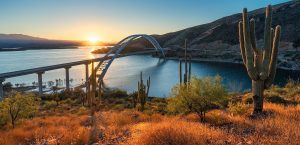
Roosevelt Lake, a 20,300-acre reservoir in the Tonto National Forest, is known primarily in many circles as a bass destination, but Arizona Game and Fish specifically identifies the reservoir as providing generally excellent fishing opportunities for both largemouth bass and crappie. That’s reason enough for a crappie angler to take notice.
November conditions here are obviously different from those in Iowa or Kansas. Rather than dealing with approaching ice, anglers may be fishing under comfortable Southwestern skies. The basic fall formula still applies, however: locate baitfish, then search nearby points, creek channels and submerged structure.
Arizona has also stocked black crappie in Roosevelt, providing additional support for the fishery.
This is the kind of destination that makes a fishing trip memorable even before the first fish hits the net.
More information: Arizona Game and Fish — Lake fishing in Arizona
Adobe Creek Reservoir, Colorado
Crappie fishing and southeastern Colorado probably aren’t two phrases most anglers naturally put together. That’s why Adobe Creek Reservoir belongs on this list.
Colorado Parks and Wildlife identifies the reservoir as offering good fishing opportunities for crappie. Black crappie are among the lake’s established gamefish, and boat anglers generally have the advantage because shoreline access is limited.
This isn’t a destination where you should expect to find acres of classic Southern-style flooded timber. Instead, approach it as a western warm-water reservoir and let your electronics do much of the work.
Search for concentrations of baitfish and fish holding near available structure or depth changes. Once you locate a school, vertical jigging with small plastics or presenting a minnow can be effective ways to work the fish thoroughly.
The real attraction is the novelty. How many crappie anglers can say they’ve planned a fall slab trip to Colorado?
More information: Colorado Parks and Wildlife — Adobe Creek Reservoir
Go Somewhere New
The great crappie lakes will always be there. But November may be the perfect month to take a chance on a destination you’ve never fished. Pull up the contour map. Study the habitat. Check the latest fishing reports. Find a local bait shop and ask a few questions. Then launch the boat and start figuring things out.
That’s part of what makes destination fishing fun.
And if you happen to find a lake full of hungry slabs that none of your fishing buddies have heard about, well, you can decide for yourself whether to tell them.
(CrappieNOW editor Keith Sutton has fished for crappie in more than 30 states.)
