

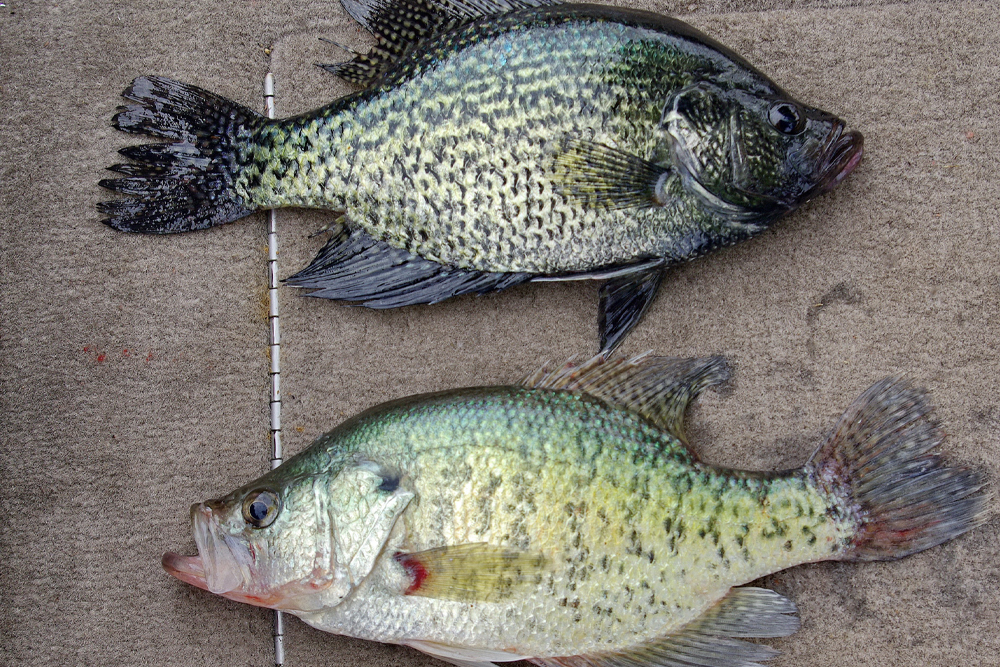
Black crappie (top) and white crappie (bottom) may look similar, but their
spring behavior isn’t the same. Water clarity and habitat often determine
which species is most catchable.
When to Target Black Crappie Instead of White
Story and photos by Keith Sutton
Across much of the South and Midwest, anglers are blessed—and sometimes confused—by lakes that hold both black crappie and white crappie. At first glance, the two species seem interchangeable. They look similar, eat similar prey and are often caught on the same jigs and minnows. Yet in spring especially, their behavior can diverge in ways that make one species far easier to catch than the other.
Understanding when to target black crappie instead of white isn’t about memorizing minor identification details. It’s about recognizing how biology drives behavior—how water clarity, temperature, habitat and forage influence each species differently. Armed with that knowledge, anglers can make smarter decisions about where to fish, how to fish and which crappie to focus on during any given spring outing.
Built for Different Water
The most important difference between black and white crappie is their relationship with water clarity. Black crappie evolved to thrive in clearer water. They typically have seven or eight dorsal spines (versus five or six on whites), a trait associated with maneuverability and stability in open, clear environments. Their bodies are also more laterally compressed, which suits them for cruising and feeding in clearer conditions.
White crappie, on the other hand, are better adapted to turbid or stained water. They tolerate low visibility, fluctuating water levels and heavier current better than black crappie. In reservoirs with muddy inflows or rivers with regular current, white crappie often dominate.
For anglers, this means a simple starting rule in spring: when the water is clear to lightly stained, black crappie deserve extra attention. In dingy or muddy water, white crappie are usually the safer bet.
Spring Temperature Triggers
Both species spawn in spring, but black crappie typically move shallow earlier than white crappie when conditions are right. They are especially responsive to stable warming trends in clear water. When surface temperatures creep into the upper 50s and low 60s and visibility remains good, black crappie often slide toward spawning areas ahead of their white cousins.
This early movement can create outstanding fishing opportunities if anglers recognize what’s happening. On a clear-water lake in early spring, white crappie may still be suspended along deeper breaks or creek channels, while black crappie are already staging on shallow flats, secondary points and protected pockets.
Later in spring, when water temperatures climb into the mid-60s and beyond, white crappie typically flood the shallows as well. At that point, the advantage of targeting black crappie diminishes, and mixed catches become the norm.
Structure: Subtle Versus Obvious
Another key distinction lies in how each species uses structure. White crappie gravitate toward obvious cover—standing timber, brushpiles, stake beds and dock pilings. In spring, they often relate tightly to this cover, especially in stained water where it provides both protection and ambush points.
Black crappie are more likely to roam and use subtle structure. In clear water, they may suspend over gravel flats, ease along weed edges or hold near isolated cover that barely shows on electronics. Rather than burying themselves deep in brush, blacks often position just off cover or over open areas adjacent to spawning habitat.
For anglers, this means adjusting expectations. If you’re fishing a clear lake and pounding brushpiles without success, black crappie may be nearby— but not in the brush. Long casts, slow retrieves and attention to depth can be far more productive than vertical presentations.
Forage Preferences and Feeding Style
Both black and white crappie feed heavily on small fish, particularly shad where available. However, black crappie tend to rely more on sight-feeding, which reinforces their preference for clear water. They are often more selective and can be wary of noisy presentations or oversized baits.
White crappie are less visually dependent and more opportunistic. In murky water, vibration and profile matter more than color or fine detail. That’s why white crappie often respond well to larger jigs, brighter colors and aggressive presentations.
When targeting black crappie in spring, downsizing can be critical. Smaller jigs, lighter line and natural colors frequently outproduce bulkier offerings. A 1/32-ounce jig in a shad, smoke or translucent pattern may draw strikes when heavier, flashier lures fail.
Location: Reading the Lake
In lakes that hold both species, distribution often varies by arm or zone. Clearer sections—such as the main lake, rocky banks or areas with limited inflow—tend to favor black crappie. Murkier creeks, river arms and shallow flats influenced by runoff are more likely white crappie territory.
Savvy anglers use this to their advantage in spring. After heavy rains muddy up feeder creeks, white crappie may dominate those areas, while black crappie remain catchable in clearer portions of the lake. Conversely, during stable, dry weather, black crappie may push shallow in areas many anglers overlook.
Electronics help, but observation matters, too. If you can see bottom in three or four feet of water, black crappie are probably present and potentially catchable.
Gear and Technique Adjustments
Targeting black crappie effectively often requires a lighter touch. Long rods help make quiet presentations from a distance. Light line—4- to 6-pound test—allows small jigs to sink naturally and move freely. Slip floats can be deadly in clear water, suspending a bait just above spawning fish without spooking them.
Boat control is also critical. In clear, shallow water, black crappie are more sensitive to noise and shadow. Keeping distance, minimizing trolling motor use and anchoring or using shallow-water poles can dramatically improve success.
White crappie anglers can usually be more aggressive. Tight-lining, pushing jigs or working heavy cover with stout rods often excels when targeting whites in stained water.
Stop Fishing Blind
The biggest mistake anglers make is treating black and white crappie as the same fish. In reality, spring offers clear windows when one species is far more vulnerable than the other. By paying attention to water clarity, temperature trends and habitat, anglers can decide which crappie to target and how.
When the water is clear, warming and stable, black crappie often provide the better opportunity. Fish lighter, think shallower and focus on subtle structure. When conditions are muddy, fluctuating or heavily influenced by current, white crappie usually take center stage.
Learning to make that choice transforms spring fishing from a guessing game into a strategy. Instead of fishing blind, anglers who play to each species’ strengths catch more fish—and understand their waters better with every trip.
(CrappieNOW editor Keith Sutton has been an avid crappie angler for more than half a century. Many of his tips for crappie-fishing success can be found in his book, “The Crappie Fishing Handbook, available on Amazon.)
