

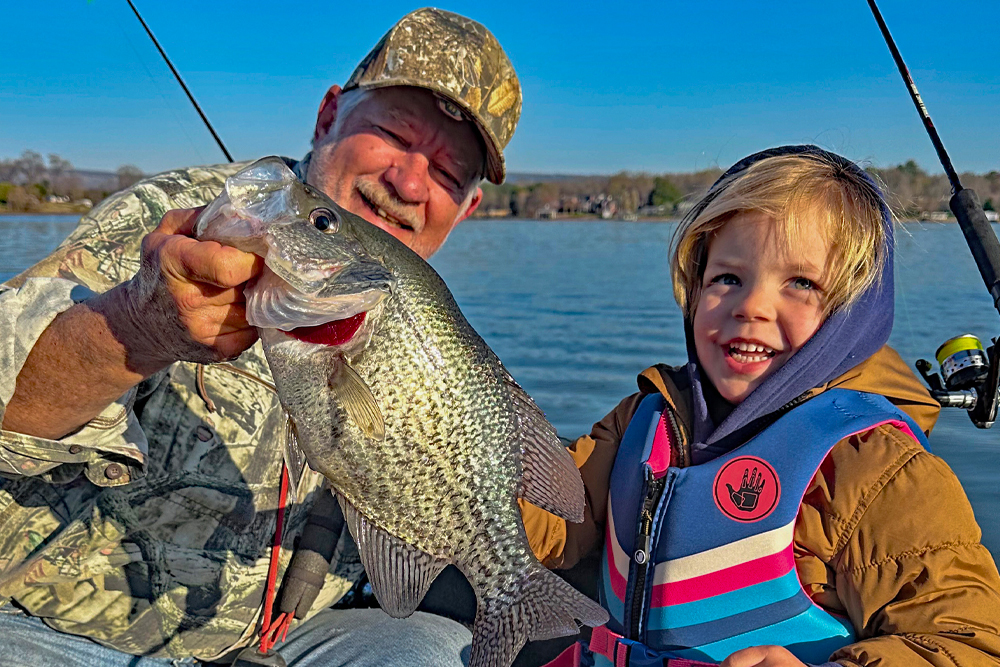
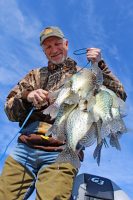
Capt. Richard Simms and his grandson, Charlie, were both obviously pleased with
this 2.5-pound crappie pulled from Chickamauga Lake on the Tennessee River last
spring while long-line trolling. (Photo: Priscilla Simms-Roberson)
Destination: East Tennessee’s Hidden Treasures
By Capt. Richard Simms
For generations, anglers have been drawn to the Tennessee River for its beauty, its history and the promise of discovering something extraordinary beneath its surface. Beginning near Knoxville and flowing through the heart of Chattanooga, the river is far more than a scenic backdrop; it is a living, breathing ecosystem offering some of the finest freshwater fishing opportunities in the Southeast.
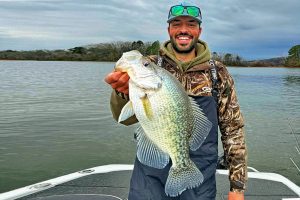
The Tennessee River is famous for its catfishing, and Chickamauga Lake has earned a national reputation as one of the country’s premier bass fisheries. Just downstream, on Nickajack Lake, Darren Nunley made headlines in February when he caught the new Tennessee state-record largemouth bass weighing 15.75 pounds.
But when it comes to crappie fishing, the Tennessee River often remains below the radar. The truth is that these productive waters produce the same kind of outstanding results for crappie anglers as they do for bass and catfish fishermen.
The same month Nunley caught the new state-record largemouth, Anthony Mondo landed a remarkable 4-pound black crappie from Chickamauga Lake. Although it did not surpass the state record, Mondo had the fish weighed on certified scales, confirming what many local anglers already know: Chickamauga Lake grows giant crappie.
Crappie anglers fish the lake 365 days a year with impressive success. Recent Tennessee Wildlife Resources Agency (TWRA) creel surveys show anglers average 2.36 crappie caught per hour of fishing. Ask any fisheries biologist, and they will tell you that is an exceptional catch rate.
TWRA creel clerks also surveyed anglers they encountered on Chickamauga Lake, asking 935 fishermen, “How would you rate the quality of fishing in this reservoir overall?”
The results were remarkable. Of those surveyed, 870 anglers said they were either “Satisfied” (48.1 percent) or “Extremely Satisfied” (44.9 percent). In other words, 93 percent selected one of the two most positive responses. Not a single angler reported being “Dissatisfied.”
That is a survey result few fisheries managers see, and it is one that highlights the quality of the fishery.
Unlike some Southern reservoirs where spider-rigging dominates the crappie scene, you will not find large numbers of anglers using that technique on Chickamauga Lake. Instead, fishermen rely on a variety of other proven tactics throughout the year.
During late winter and early spring, many anglers long-line troll creeks and embayments as crappie move into their prespawn patterns. After the spawn, fishermen often move offshore, using modern electronics such as forward-facing sonar to locate fish along creek ledges and drop-offs.
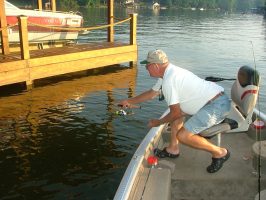
But one of Chickamauga Lake’s greatest strengths, and one shared by many East Tennessee waters, is dock shooting. During the hottest months of summer, huge schools of crappie frequently gather beneath shaded docks, providing some of the most exciting fishing of the year.
Dickey Porter, an avid CrappieNOW reader and expert Tennessee crappie angler, says finding the right dock is the key.
“I have found that in any particular cove or slough that has numerous floating docks, the crappie will be found under only one or two docks in the entire cove,” Porter said.
He says once anglers locate a productive dock, however, they should remember it. Whether stored in memory or marked as a waypoint on your electronics, good docks often produce consistently year after year.
A morning on the Tennessee River offers far more than a chance to fill a livewell. Anglers often find themselves sharing the waterway with bald eagles soaring overhead, great blue herons stalking the shoreline and turtles basking on fallen trees. The legendary Tennessee River Gorge, a 27-mile canyon carved through the Cumberland Mountains just outside Chattanooga, provides visitors with a front-row seat to the natural beauty that has shaped the region’s identity.
A Getaway With Something for Everyone
East Tennessee attracts hundreds of thousands of visitors every year. The state’s tourism economy has grown 40 percent since 2018, nearly double the national growth rate. Tourists come for many reasons, including the fishing.
Chattanooga has developed a national reputation among outdoor enthusiasts and was named North America’s first National Park City. The Tennessee River flows directly through downtown, where visitors find the world-famous Tennessee Aquarium, an attraction especially meaningful to fishermen.
The aquarium’s freshwater journey follows the story of a stream beginning in the Great Smoky Mountains before flowing toward the Tennessee River and eventually the Gulf of America. Along the way, exhibits showcase many of the ecosystems and wildlife species found throughout the region. The attraction has earned recognition from USA Today, Newsweek and Tripadvisor as one of the nation’s top destinations.
Visitors can combine a fishing trip with adventures at iconic attractions such as Rock City, with its massive rock formations and panoramic views and nearby Ruby Falls, featuring one of the nation’s tallest underground waterfalls open to the public.
Add in an IMAX Theater and the children’s Creative Discovery Museum and there is a never-ending list of things for families to do in addition to fishing.
Further to the north, near Knoxville, is the Great Smoky Mountains National Park, the most visited national park in the United States.
Gatlinburg is essentially the front door to the Smokies. The compact mountain town sits at the park’s northern entrance and has evolved into a destination in its own right, with hotels, restaurants, shops, attractions, museums, mountain-view experiences and the Gatlinburg SkyPark.
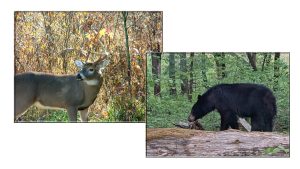
Nearby Pigeon Forge is home to Dollywood, perhaps the crown jewel of Tennessee’s entertainment industry and one of the Volunteer State’s most recognizable tourism brands.
The combination of outdoor adventure and family-friendly attractions, all within a long cast of Tennessee River fishing, makes East Tennessee unique. And experts say that nearly two-thirds of the United States’ population lives within a day’s drive of East Tennessee.
Here’s a piece of unique trivia for you. In straight line distance, the northeast corner of Tennessee is closer to Canada (390 miles) than it is to Memphis, Tenn. (470 miles).
No matter where you’re traveling from, you can spend the morning filling a livewell with crappie, enjoying lunch in a fine restaurant overlooking the water and then exploring world-class attractions in the afternoon. That blend of nature, adventure and hospitality is what keeps people returning to East Tennessee.
(Capt. Richard Simms is a retired fishing guide on the Tennessee River and owner of Scenic City Fishing Charters, booking trips for eight other catfish and bass guides. Formerly he was a game warden for the Tennessee Wildlife Resources Agency before becoming a photographer and PR guy for TWRA. That lead to a 30-year career as a broadcast journalist and freelance outdoor writer. Check out his book, “An Outdoor State of Mind.”)
